The Ultimate 2-day Hue Itinerary for Culture Lovers
Hue reveals itself in layers, from its cultural and political heart to its undeniably flavourful cuisine. Spending two days in Hue will afford you the time the city deserves to experience its richness and depth without the crowds of Vietnam’s larger cities. This itinerary will help you shape your visit and enjoy the grandeur and imperial past of Hue.
This post may contain affiliate links.
If you choose to purchase I may receive a small commission at no additional cost to you. By using these links, you are supporting the ability for me to continue creating content for this site and its running costs.
After almost a week in Hoi An, a slow journey tracing Central Vietnam’s coastline from Da Nang to Hue along the Hai Van Pass was the scenic segue I needed as I stepped into Vietnam’s former imperial capital.
Giving myself a two-day Hue itinerary, I was able to linger and give the sights of this city the time they deserved. And it quickly became a highlight on my two-week trip from the north to south of Vietnam. Along the calm waters of the Perfume River, ancient pagodas rise above its banks and imperial palaces crumble behind moss-covered walls.
Hue was once the cultural, political, and religious heart of Vietnam, but its history isn’t confined to only its museums, it’s found in everyday moments. And that’s why it deserves more than just a day trip.
With two days in Hue, you can experience the grandeur of Vietnam’s imperial past and flavours of its bold-yet-balanced cuisine. Moving at a slower pace than Hanoi or Saigon, steaming bowls of Bun Bo Hue and vibrant mosaics await you.
In this Hue, Vietnam itinerary, I’ve designed it so you don’t need to rush. You can sip salt coffee in one of the many exceptional coffee shops, dine on everything from local delights to royal-style cuisine, and see the serene scenes built around the Perfume River.
Hue, Vietnam 2-day itinerary overview
Highlights | Hue Imperial Citadel, Thung Ma Pagoda, The Nguyen Dynasty Tombs
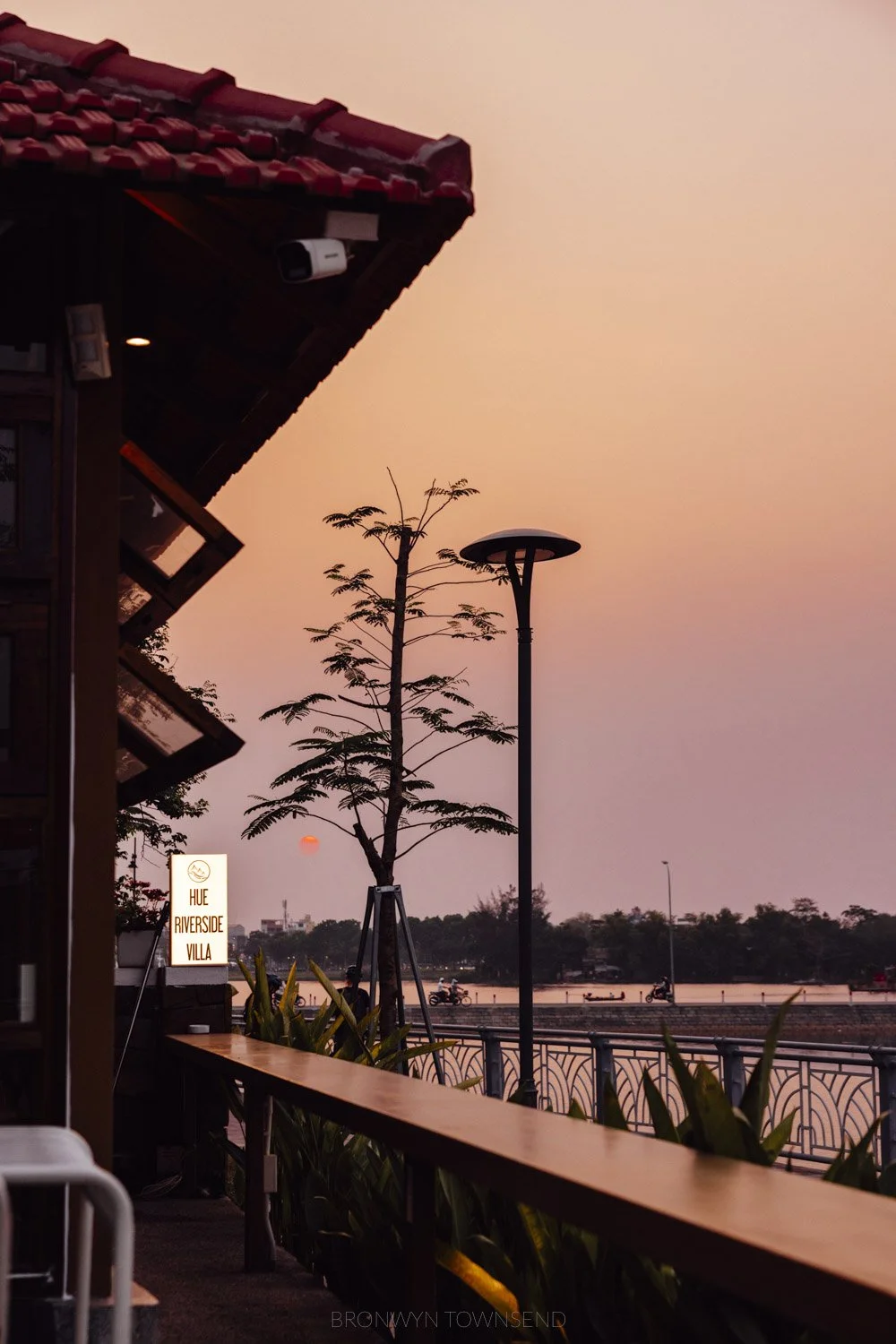
Where to stay |Hue River Side Villa
What to eat | Bún Bò Huế, Bánh Khoái, Bánh Bèo, Salt Coffee
Day 1 | Imperial City and Thien Mu Pagoda
Day 2 | The Royal tombs and palaces
Two days in Hue, Vietnam
Day 1 | The Imperial Citadel and Thien Mu Pagoda
Morning
If you’re staying at Hue River Side Villa (which I highly recommend) then enjoy breakfast in the courtyard overlooking the river. Then head next door to DAUDO for a salt or coconut coffee, which are delicious. The retro-style decor and view over the river are the perfect way to start the day before heading to the Hue Imperial Citadel.
You can either walk to the Citadel (about 30 mins) or jump in a Grab. I’d recommend allowing your full morning to explore the expansive grounds of the citadel, as there is a lot of ground to cover and plenty to see.
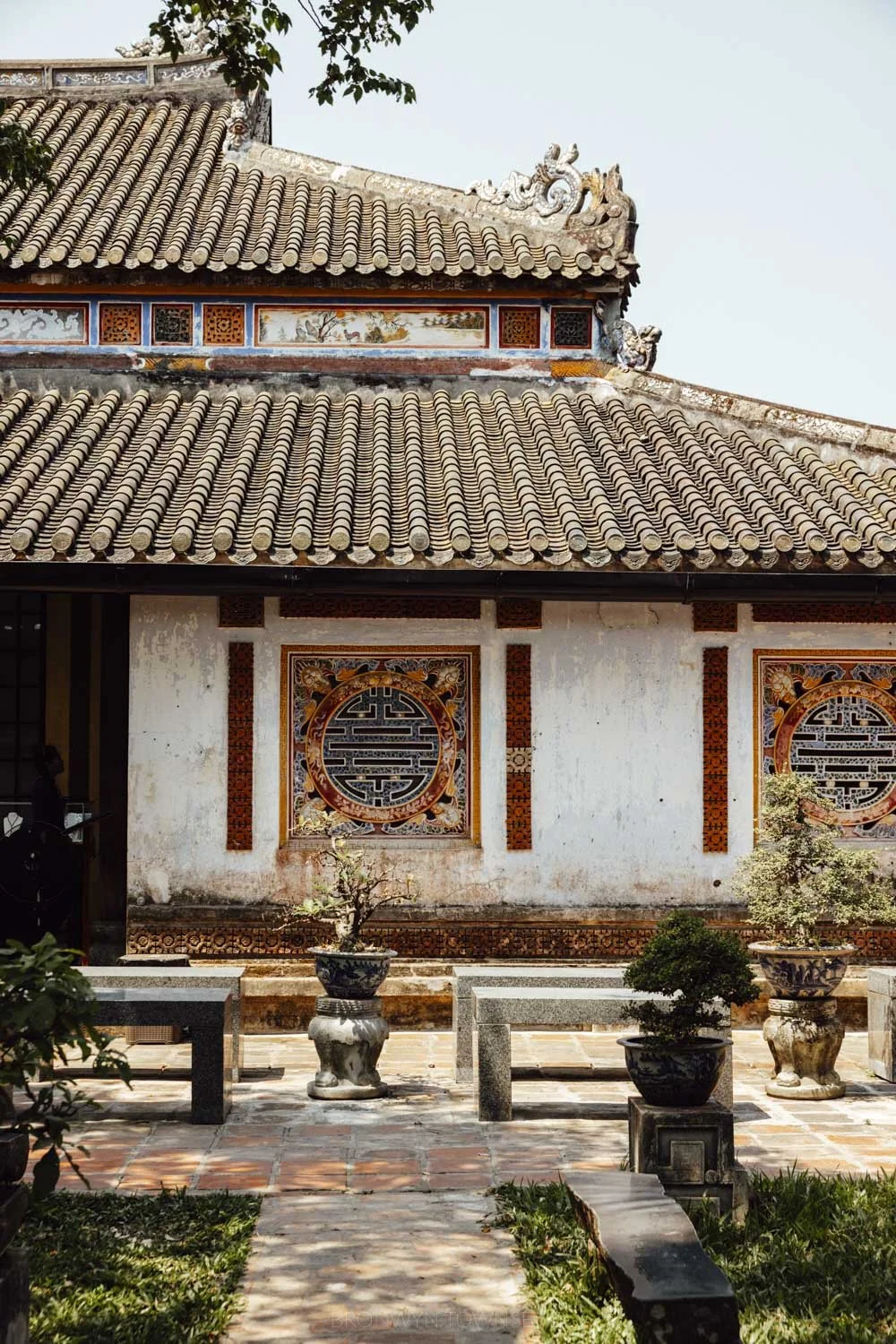
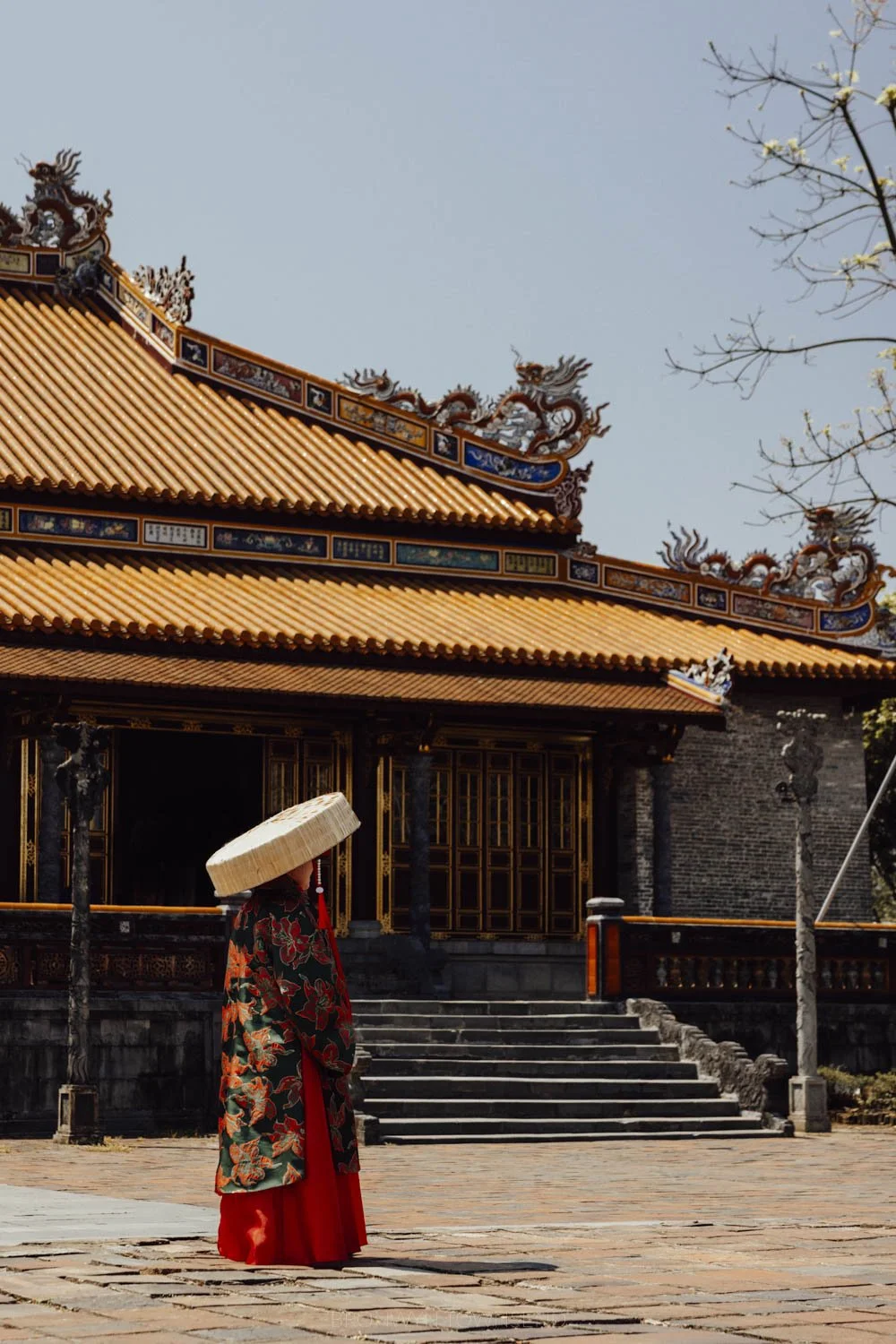
Now a UNESCO World Heritage Site, the Hue Imperial Citadel was the former seat of the Nguyen Dynasty from 1802-1945. As you move through the grounds, you’ll step through palaces, temples and imperial buildings that were inspired by Beijing's Forbidden City and takes on traditional design principles of Vietnamese feng shui.
Despite the citadel now honouring its former appearance, it was heavily damaged during the French Colonial period and the 1968 Tet Offensive. Work continues to restore the site, but a lot of it is now possible to visit. The most notable spots to visit across throughout the Imperial Citadel are:
Ngo Mon Gate | the grand southern entrance where emperors appeared during ceremonies
Thai Hoa Palace | the emperor’s ceremonial throne hall and one of the citadel’s architectural highlights
Forbidden Purple City | former private residence of the imperial family
The Mieu Temple Complex | ancestral temples dedicated to Nguyen emperors
Nine Dynastic Urns | huge bronze urns symbolizing imperial power and longevity
Dien Tho Residence | residence of the Queen Mother with elegant gardens
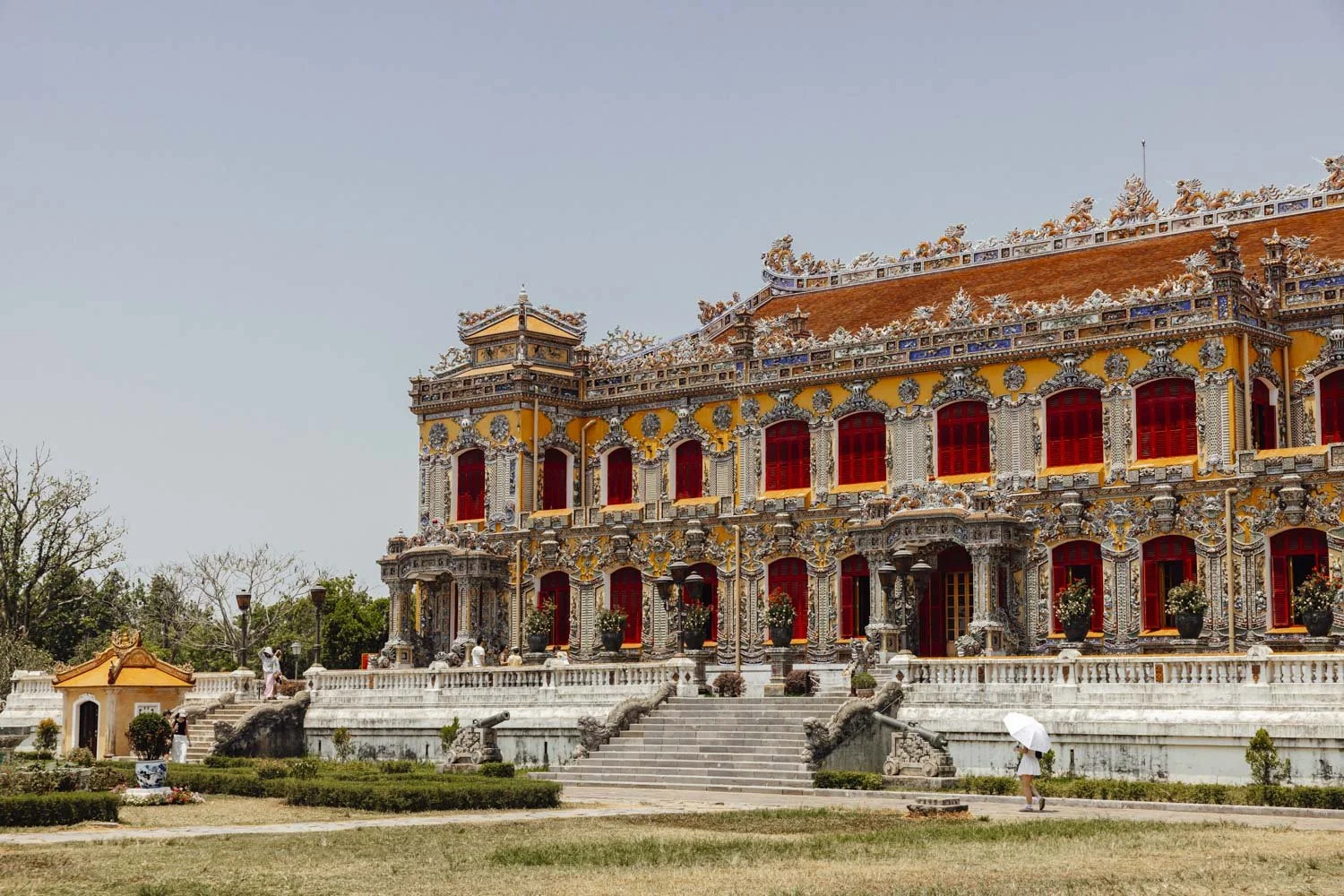
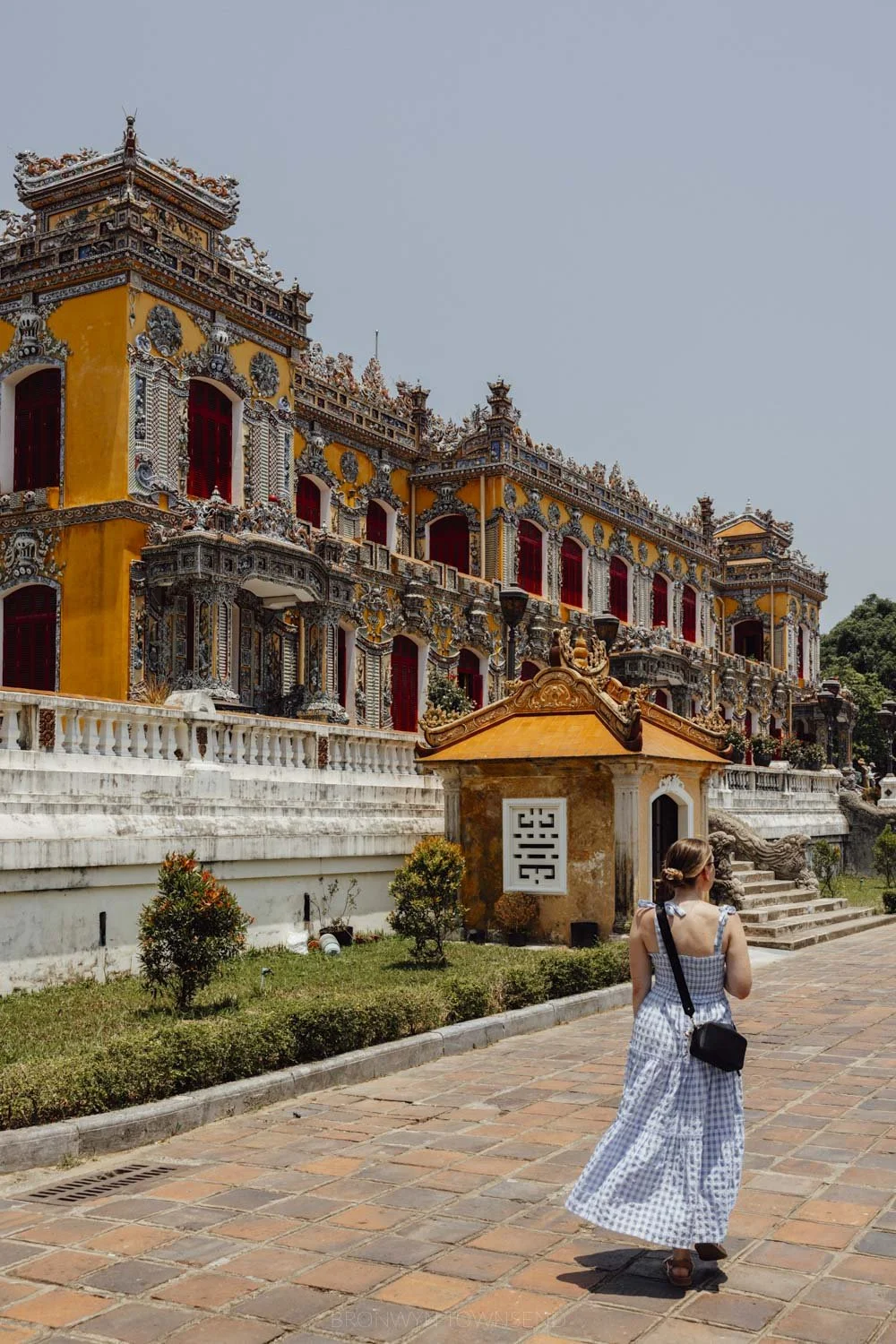
Kien Trung Palace | restored royal residence blending Vietnamese and European architectural styles, once home to the last Nguyen emperors
Important notes about visiting the Imperial Citadel
Tickets
There are several ticket options, including Citadel only, and various Citadel and tomb combination tickets. I recommend choosing the two tombs combination ticket, as it covers two days which means you get a small discount and can use it for day 2 of this Hue itinerary.
Dress code
Dress modestly, with shoulders and knees covered, particularly if you are planning to visit temples within the grounds. I carried a scarf that I could pop over my shoulders, as I was wearing a sleeveless dress when I visited due to the intense heatwave.
Be prepared
Don’t forget to apply and pack sunscreen, a lot of the grounds are exposed and the UV index is high in Vietnam. You can bring water, but there are also a few small stores and vending machines to purchase cold drinks.
Afternoon
It’s time to start making your way through some of Hue’s popular and well-known dishes. A favourite destination of the late Anthony Bourdain, Hue’s cuisine is defined by balancing bold and delicate flavours and the yin-yang and hot-cold principles.
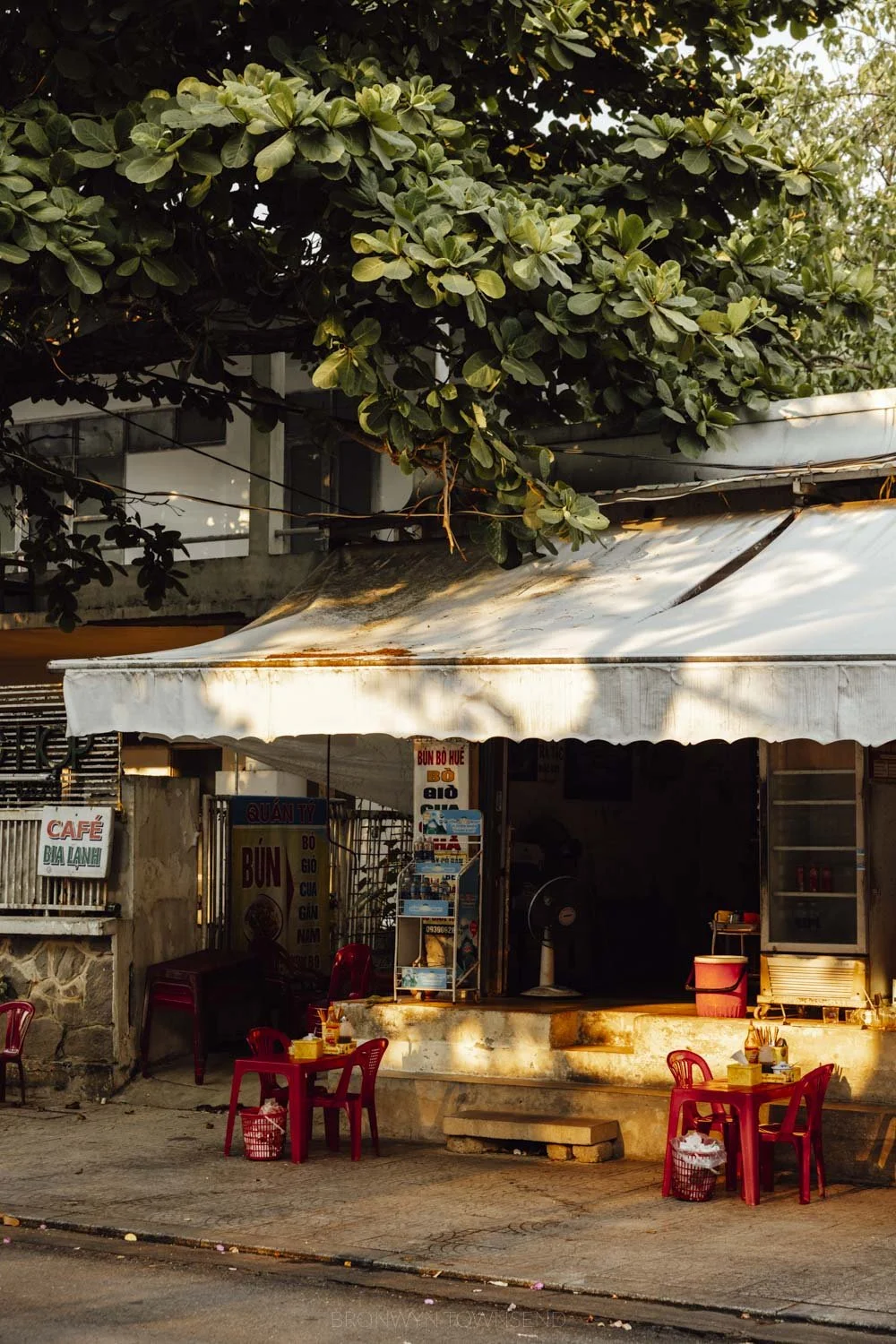
Dong Ba Market is a great way to experience some of the region’s typical dishes in a local setting. Located by the banks of the Perfume River, it’s a great way to experience daily life. Not sure what to try? Give one of these dishes a try:
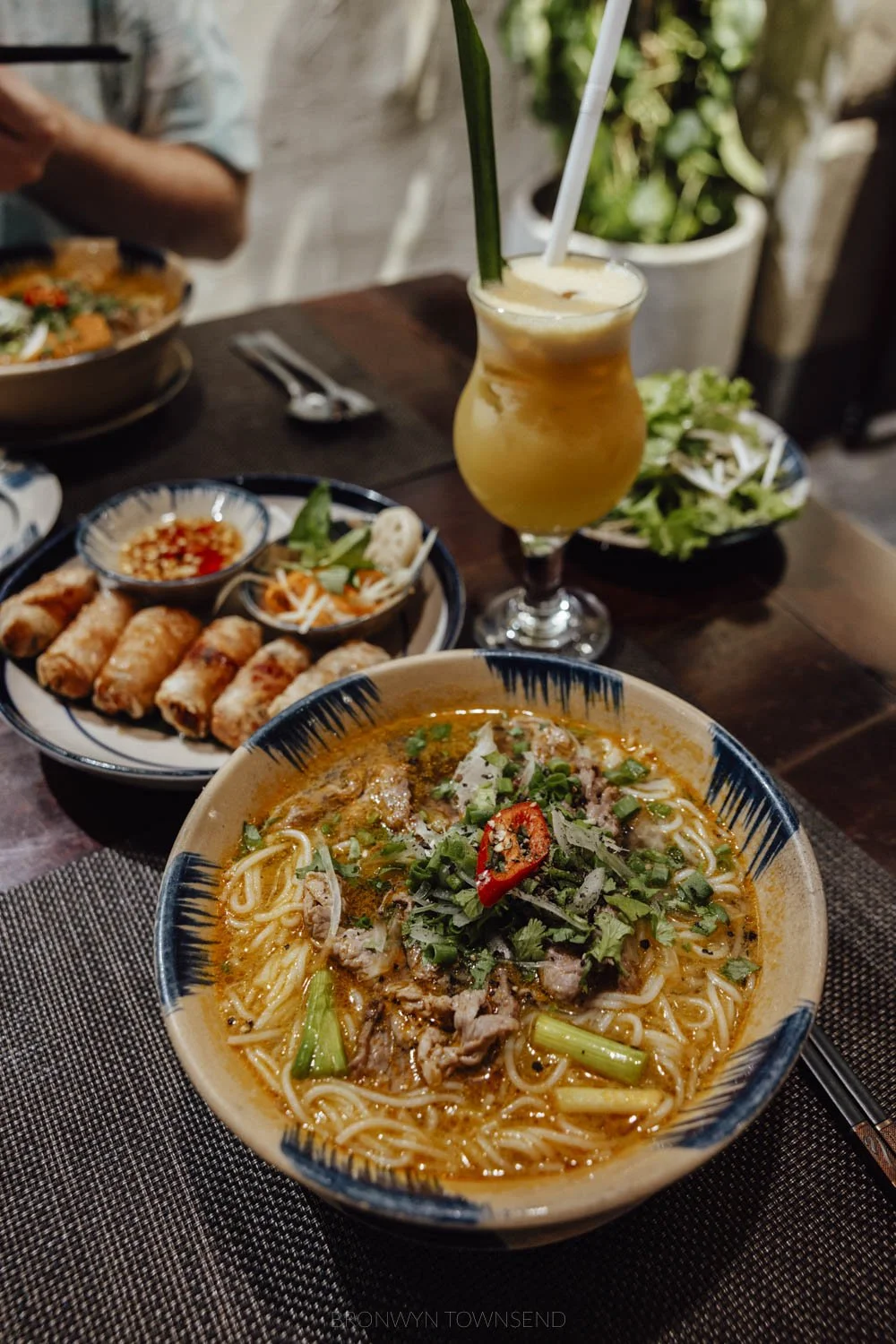
Bún bò Huế | a spicy beef noodle soup that originated in Hue
Bánh bèo | tiny steamed rice cakes served in small bowls
Bánh khoái | a savoury, crisp pancake from central Vietnam, similar, but small and crispier than bánh xèo
Nem lụi | grilled pork skewers wrapped around lemongrass stalks
My favourite Hue dish is Bun Bo Hue, it’s richer than pho and strikes the perfect balance for me. You can also do some shopping here after lunch, as the market sells local handicrafts, textiles and clothing, as well as other typical souvenirs.
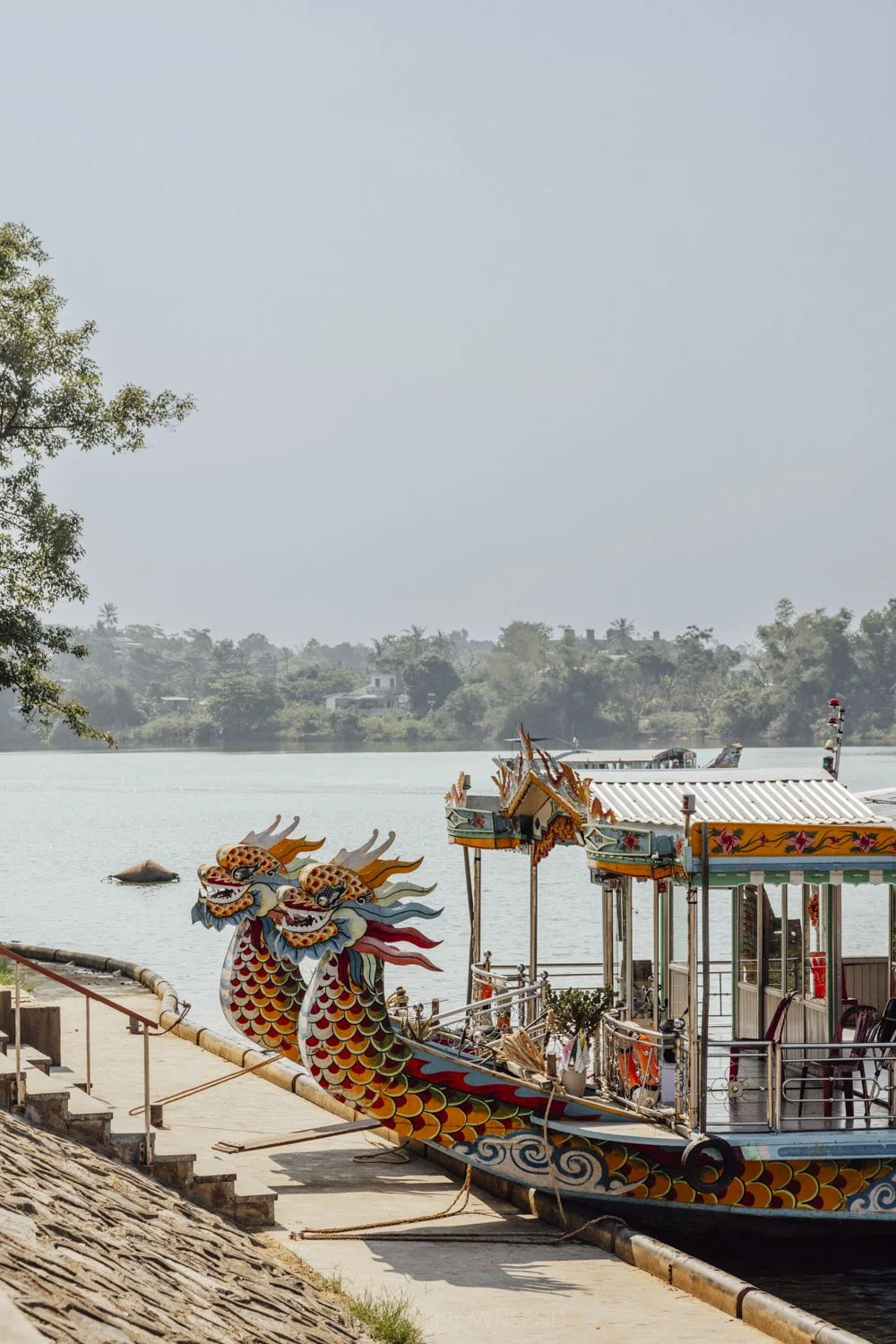
Spend the rest of the afternoon on a tour along the Perfume River on board a dragon boat. These vibrantly painted wooden boats feature dragon imagery that is associated with Vietnamese royalty. Cruises usually depart from Toa Kham boat station near Truong Tien Bridge.
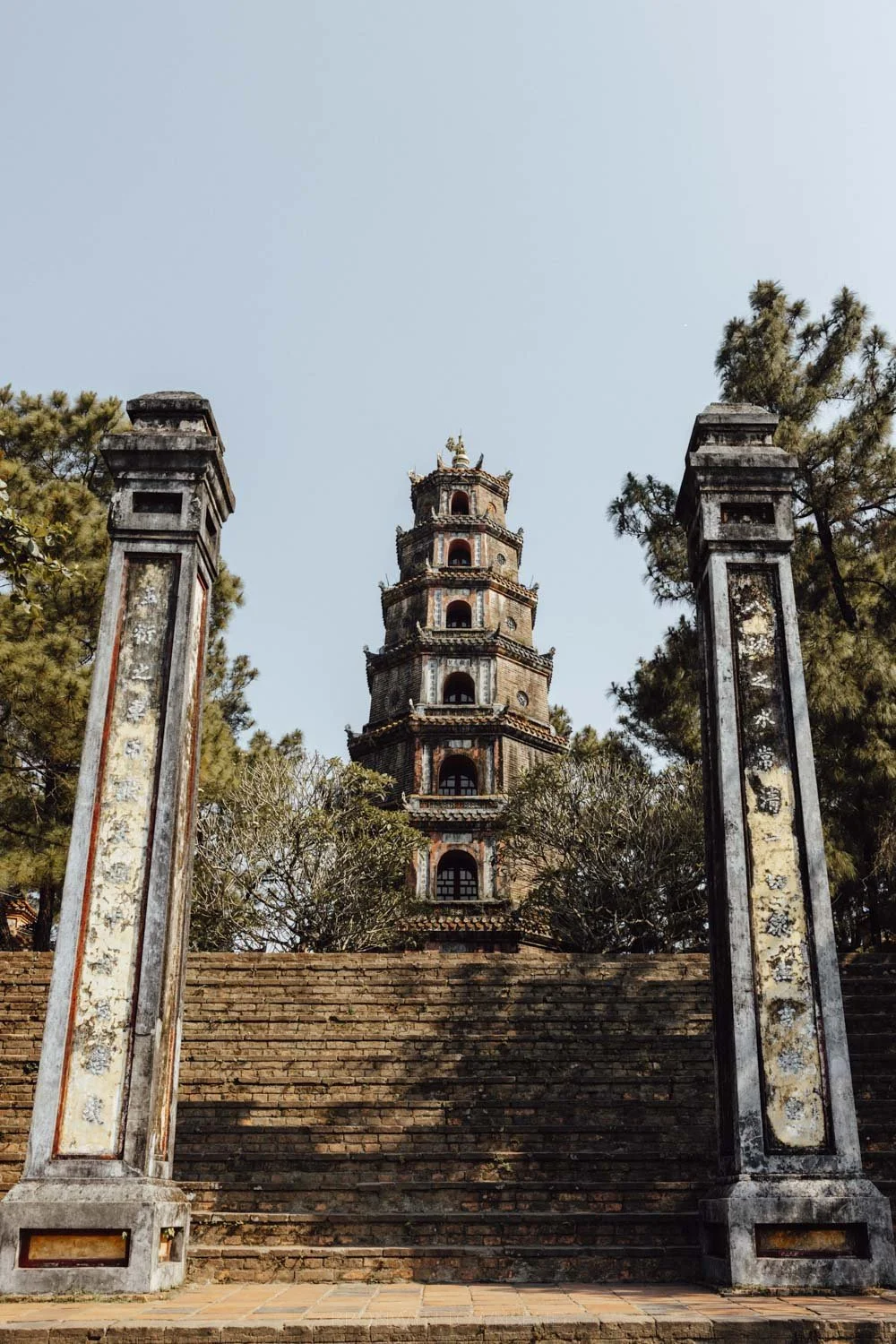
Head to Thien Mu Pagoda, one of the oldest religious sights in Central Vietnam. Perched on a hill overlooking the Perfume River, it’s extra charming at sunset. The seven-storey Octagonal pagoda, Phuoc Duyen Tower, has become a symbol of Hue and is the tallest in Vietnam.
Head back via dragon boat or Grab to the city centre for dinner.
Evening
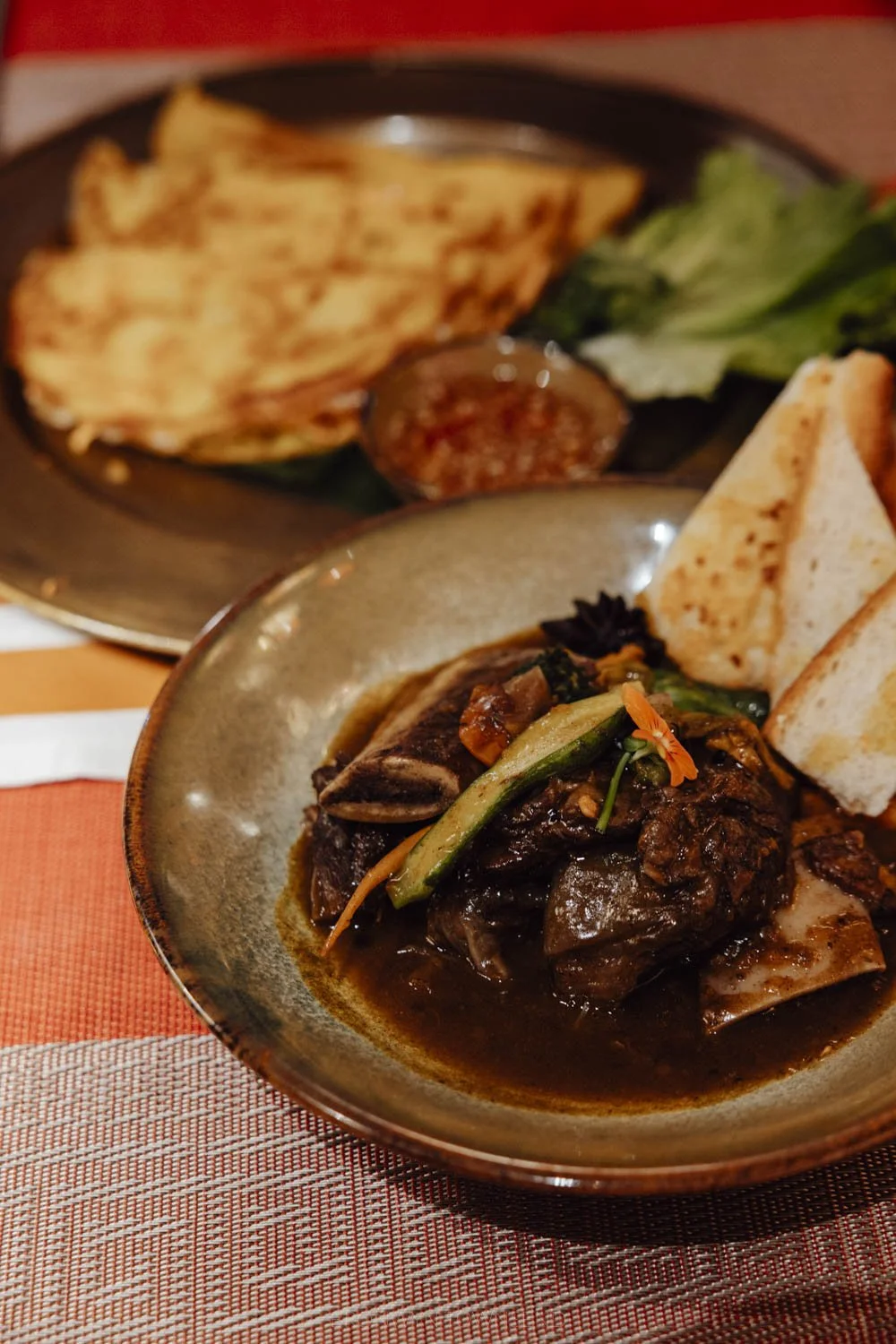
When I was looking for places to eat in Hue, I came across Vi Hue Restaurant. It’s a more upscale restaurant, serving a taste of royal-style Hue cuisine. The dishes are elegant and refined, and I loved my slow-cooked beef and the Banh Khaoi.
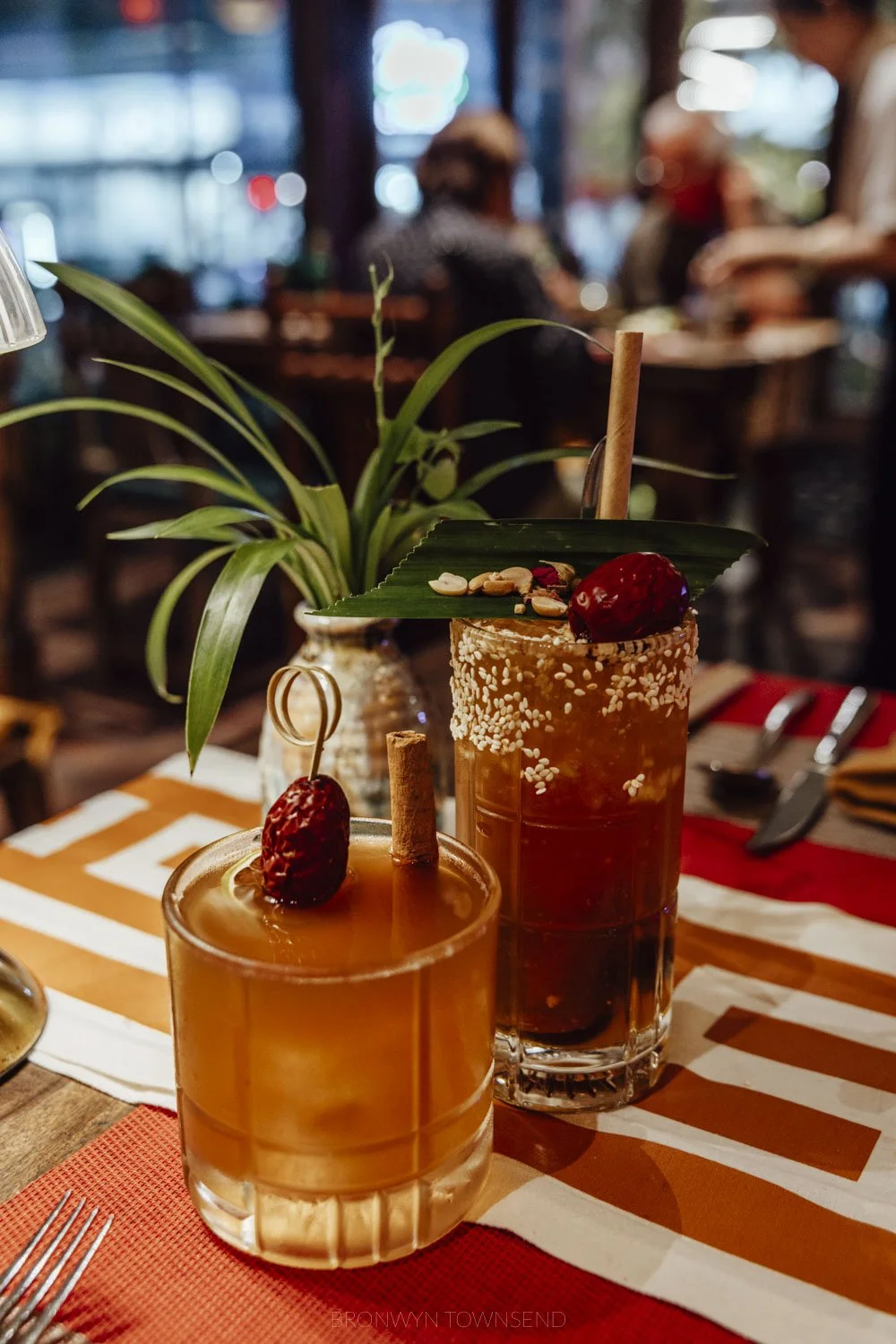
They also have an incredible cocktail and mocktail menu. It was one of the more expensive meals I ate in Vietnam, but was absolutely worth it.
Day 2 | Royal tombs, palaces, and Hue Cuisine
Morning
There are few things I enjoy more than starting my day with a great coffee, and Vietnam has plenty of those. Hue also packs a punch when it comes to great coffee shops and cafes. Depending on where you’re hotel is, these are a few of my favourite spots in town:
Tan.
Son. Studio
Hi. Haven
MUA
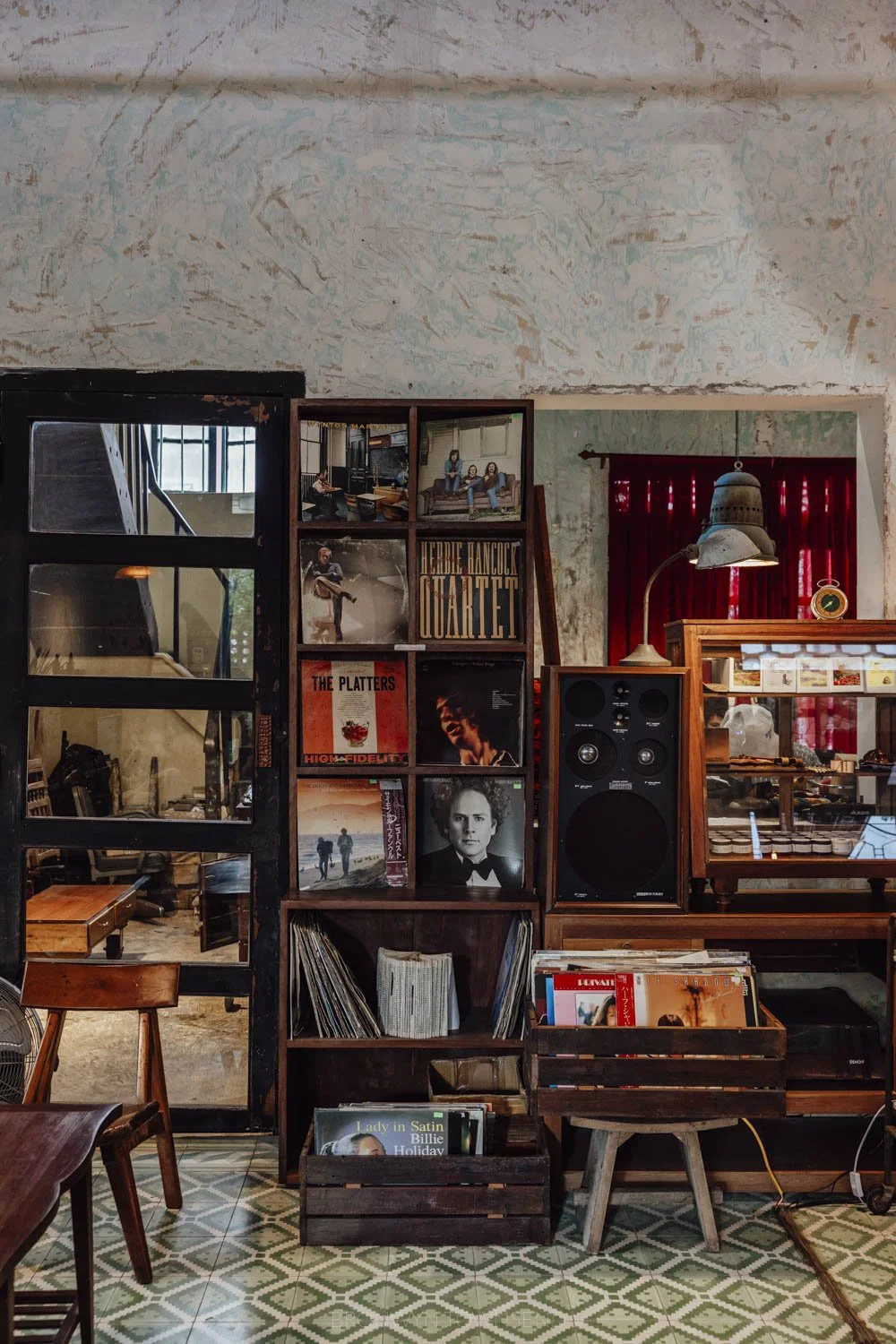
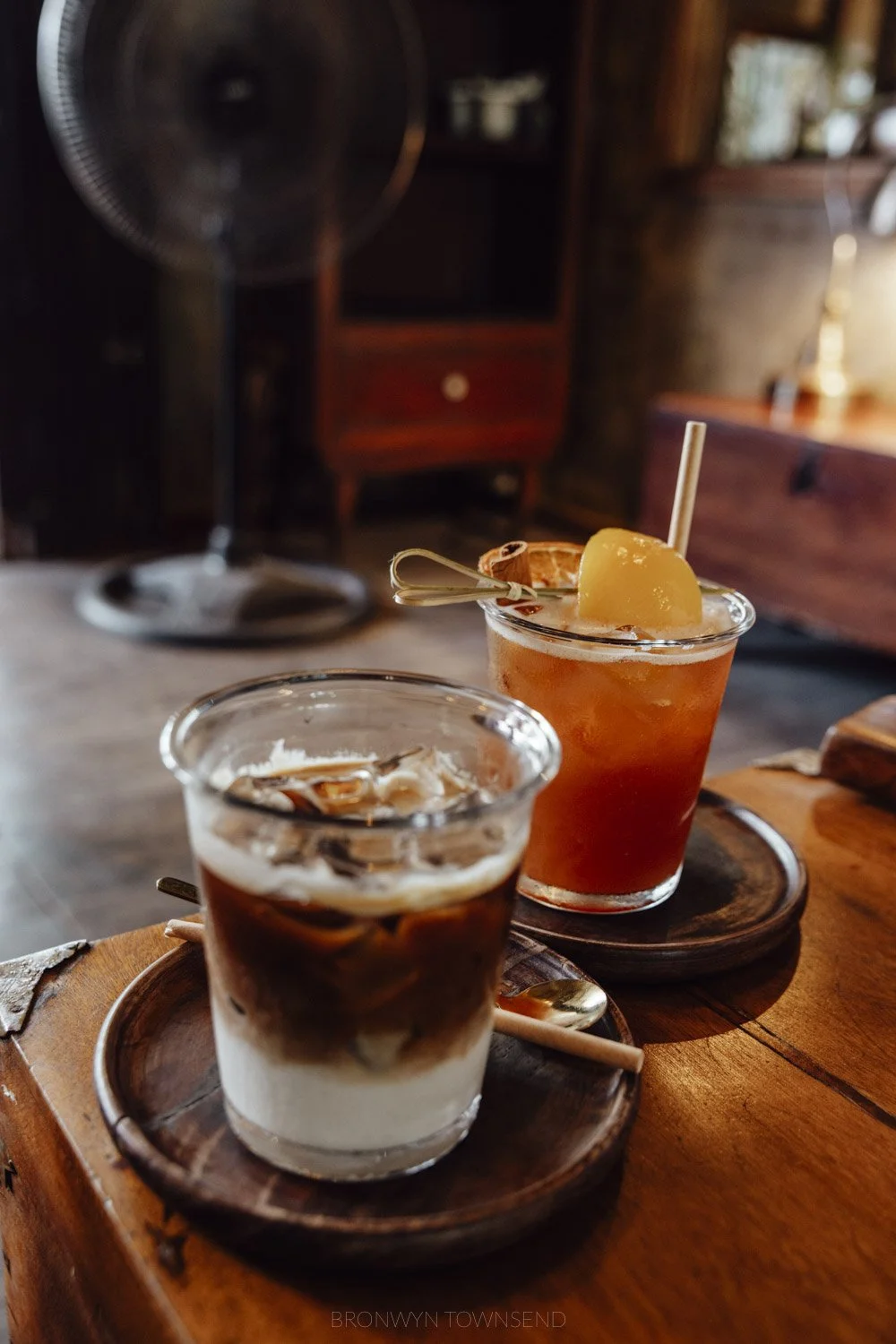
Then, head out to the tombs of the Emperors of the Nguyen Dynasty. There are seven tombs in total, and four are located close together. They’re about a 30-minute drive from Hue centre. You can either book a driver, which I’d recommend, or use Grab, but with Grab it may take a little longer before you can secure a driver.
Ideally, you will have purchased a combination ticket at the citadel yesterday, and you will have had to have selected which tombs you want to visit, as the tickets are tied to a specified combination. My preference after researching the tombs were the mausoleums of Khai Dinh and Minh Mang.
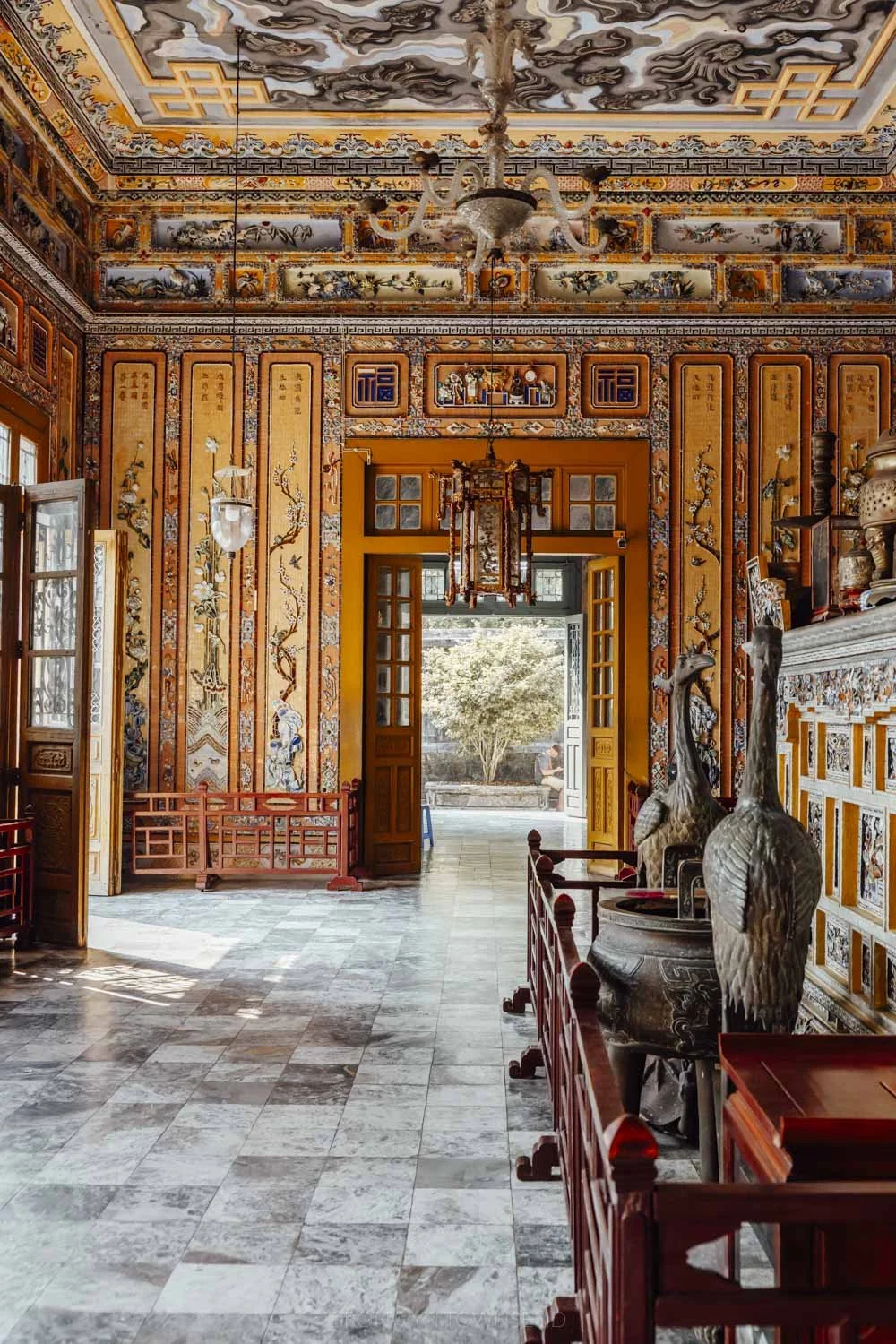
The tomb of Emperor Khai Dinh is an elaborate mausoleum that blends Vietnamese, European, French, and Gothic elements to create a completely unique and surreal tomb. The exterior is a dark stone display that certainly leans into the Gothic European style, while inside reveals the bright and ornate Thien Dinh Palace.
The main hall is one of my favourite places, with floor-to-ceiling glass and porcelain mosaics. The view from the top of the stairs also reveals vistas overlooking the mountains that surround Hue.
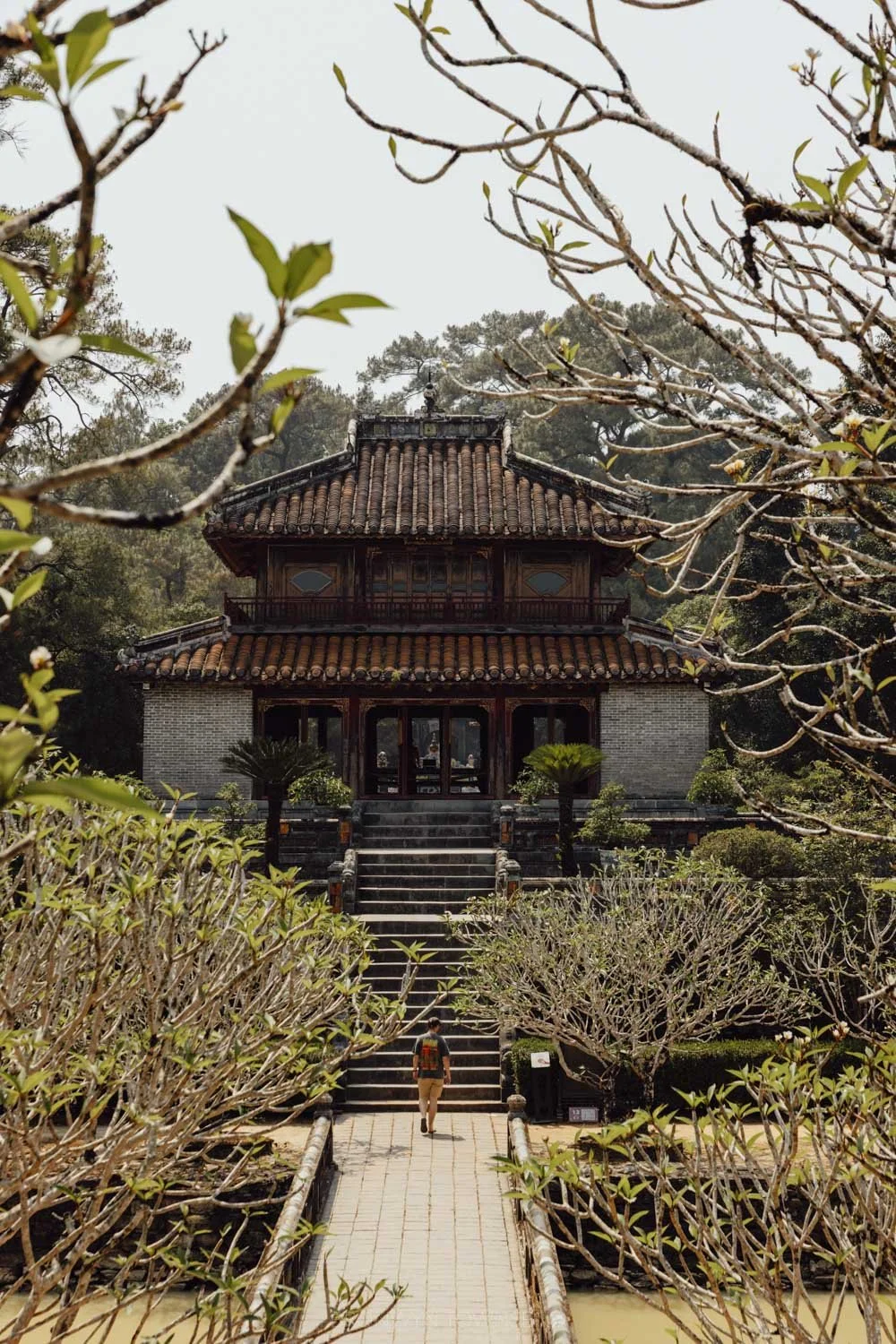
The second Tomb of Emperor Minh Mang feels more refined, even more so for its harmonious architectural style that focuses heavily on symmetry. The design reflects Minh Mang’s Confucian ideals, and focuses on harmony between nature, architecture, and imperial power.
You can choose to visit the other tombs instead, just select when buying your combination ticket on day 1.
Tomb of Tự Đức | A peaceful, poetic royal retreat surrounded by lakes and gardens that reflects Emperor Tự Đức’s scholarly personality.
Tomb of Gia Long | A quiet and remote tomb set within natural landscapes, honoring the founder of the Nguyễn Dynasty.
Optional extra
If you are interested in visiting the incense village or the abandoned waterpark, then these are both in the same general area as the tombs. It makes sense to couple these while you’re out this way.
Afternoon
Head back to Hue centre and grab lunch at Nook Eatery. It’s ideal if you’re looking for something lighter, or a change from the usual Vietnamese cuisine. I just had a toastie and a fresh juice, which was exactly what I needed.
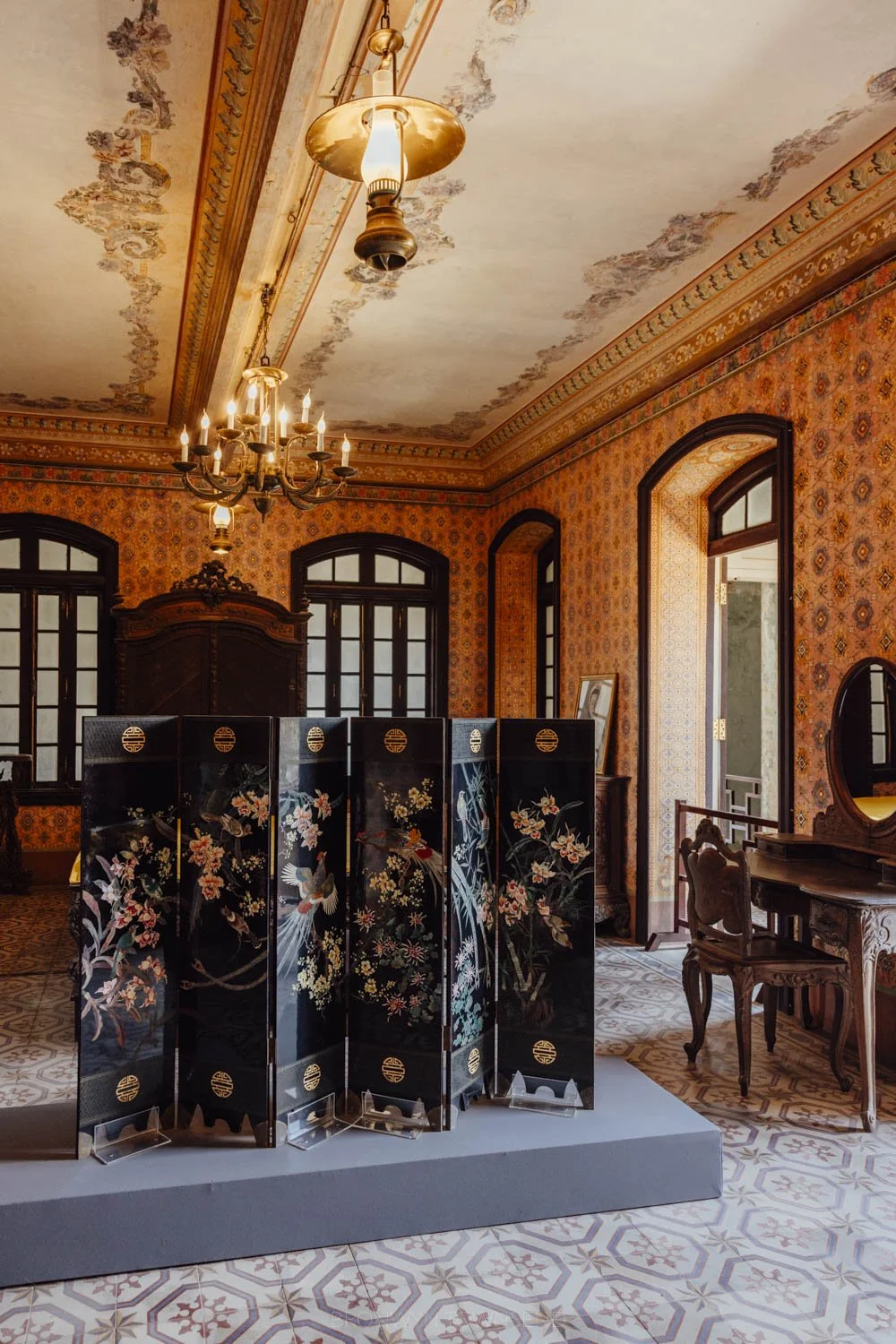
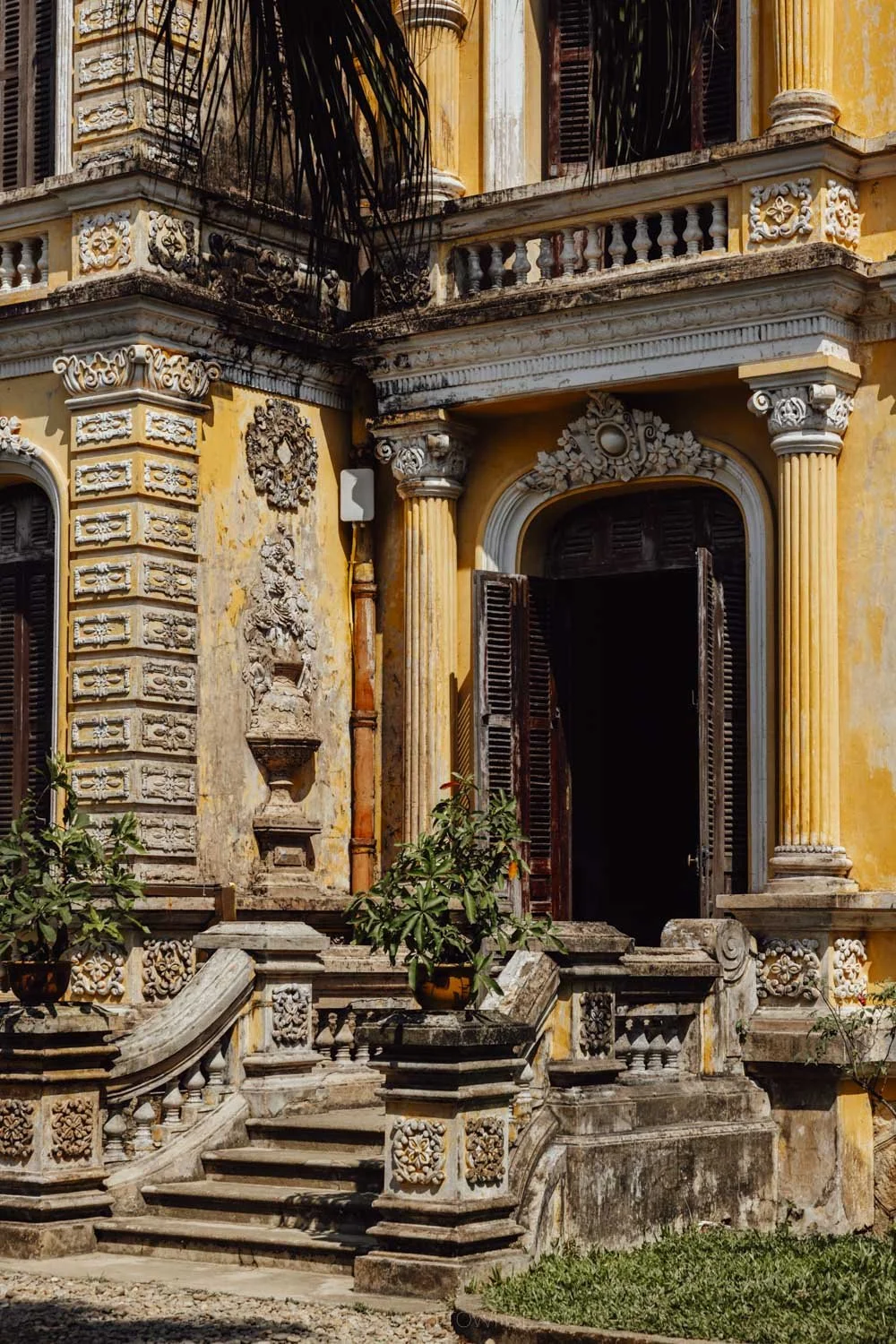
Then make your way to Anh Dinh Palace. Once you arrive, it will be undeniable that this palace was built by Emperor Khai Dinh in 1917, because of its mix of Vietnamese and European influence. This also served as the residence of Emperor Bao Dai, the last emperor of Vietnam.
Smaller than the Citadel, it’s often overlooked by tourists, but I did notice it was popular for young women who wanted to dress up and have professional photos taken. You’ll only need around 45 minutes to an hour here.
For the rest of the afternoon, take things slow at one of Hue’s great coffee shops or cafes, or head to the coffee shop and wine bar-hybrid, Fai.
Evening
For dinner, Nhà hàng Bánh Gánh offers plenty of local Vietnamese dishes and I had no problem without a reservation. Another option nearby is Nhà Hàng Cơm Niêu Khải Hoàn.
And that wraps up your two days in Hue.
Is 2 days enough in Hue, Vietnam?
Two full days is the minimum I’d recommend to spend in Hue. This gave me enough time to see all the top attractions in the city without feeling rushed (which was so needed because it was 38 degrees celsius!) and have time to relax.
If you want to include a tour to the DMZ, visit all of the tombs, or have an even slower pace, then I’d recommend adding an extra day.
How to get to Hue
Located in Central Vietnam, Hue is well-connected with several other popular destinations across Vietnam, making it easy to add this cultural highlight to your itinerary. Domestic travel within Vietnam is convenient and affordable, and I’d recommend either travelling by rail or air depending on where you are coming from.
By Air
Hue’s airport, Phu Bai International Airport (HUI), is around 25 minutes from Hue centre and easy to reach by Grab. Connections to destinations including Ho Chi Minh City and Hanoi are available via a few daily services, and typically cost around AU$70.
By Train
If you’re based in Da Nang or Hoi An, then you can take the train from Da Nang to Hue in around 3 hours. This route passes through the Hai Van Pass, one of the most scenic routes along Vietnam’s coastline by train. I’d recommend opting for one of the Heritage train routes if you plan on travelling from Da Nang to Hue by train.
*Note | If you’re planning on travelling from Hoi An and using the train, I recommend taking a Grab from Hoi An to Da Nang train station.
You can also take an overnight sleeper train from Hanoi or Saigon to Hue. From Hanoi, it’s around a 12-14 hour journey, while from Ho Chi Minh City the sleeper train service takes between 18-22 hours. This is a great option if you want to experience overnight train travel or prefer a slower-paced itinerary.
By Car
If you’re based in Da Nang or Hoi An, you can either rent a car or book a private driver to take you from either of these cities to reach Hue. This can be worthwhile for groups and families, or if you just aren’t into train travel.
The cost for a private transfer from Hoi An to Hie is around 1,450,000 VND to 1,800,000 VND for a sedan, and more for larger vehicles. The journey takes around 4 hours and is a comfortable option, especially during the hot summer months.
Is it better to stay in Hue or Hoi An?
I don’t consider this a case of one or the other. I spent time while in Vietnam staying in both cities - 5 nights in Hoi An and 2 nights in Hue. They offer different experiences and atmospheres, so I’d urge you to stay in both.
Hue is quieter and less touristy, serving as a foodie destination as much as a cultural one. Accommodation is also cheaper than in Hoi An. Hoi An definitely experiences larger tourist crowds, but it’s a beautiful and important destination in Central Vietnam. If you do choose to base yourself in one or the other, just be mindful that the journey between the two cities is around three hours each way.
Is Hue worth visiting?
Hue is perfect if you are interested in travelling at a slower pace, are passionate about exploring more of Vietnam’s history and culture, or love typical Vietnamese architecture. When I first began researching for my two-week Vietnam trip, I kept coming back to Hue and instead of squeezing in a long day trip from Hoi An, I settled on giving this city the time it deserves.
The UNESCO-listed historic imperial citadel and tombs are reason enough to visit, but there are plenty of other reasons too. It’s quieter than Hoi An, or the larger cities of Hanoi and Ho Chi Minh City, and it has a great culinary scene that even Anthony Bourdain praised because it embodies everything he loved about Vietnam: complex and bold flavours, and a deep connection to authentic Central Vietnamese cuisine.
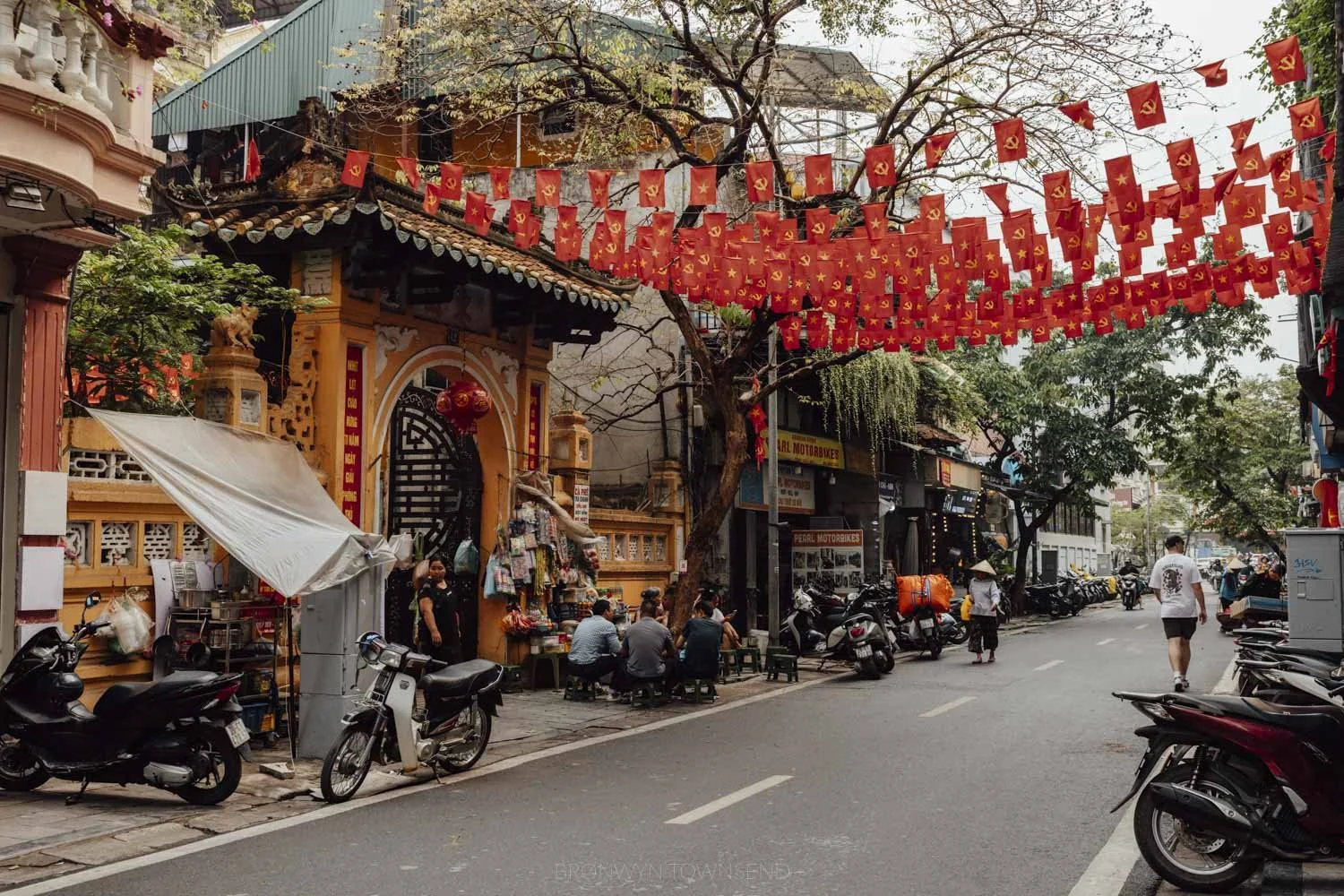

Explore the best of Hue in two days with this itinerary that immerses you in Vietnam’s historical and cultural heart, including where to go and what to eat.