Where to Stay in Tokyo: Best Areas and Hotel Guide (2026)
Japan’s capital is the largest metropolis on earth, so it’s no surprise choosing where to stay in Tokyo can feel overwhelming. This detailed guide has been curated after years of travel to this iconic city, with reviews of the top neighbourhoods for travellers along with hotel recommendations. So you can spend less time stressing about where to stay and more time planning how to enjoy your time here.
Updated July 2026

This post may contain affiliate links.
If you choose to purchase I may receive a small commission at no additional cost to you. By using these links, you are supporting the ability for me to continue creating content for this site and its running costs.
I remember spending weeks trying to decide where to stay in Tokyo during my first trip to Japan. Dozens of train lines, endless suburbs, and a Google map full of pinned attractions, restaurants, and cafes. Even after settling on a hotel, I still wasn’t certain. Turns out, the hotel and location were both great, but I understand just how overwhelming choosing where to stay in Tokyo can be.
Over years of travelling to Japan, I’ve stayed in hotels and apartments in Tokyo all across the city. And last year, while spending three months travelling across the country, I passed through and spent time in Tokyo on several occasions. Each visit came with the opportunity to try out new accommodation. And while I might choose different hotels each time, there are a few areas in Tokyo I keep returning to.
After hundreds of hours of research and even more hours on ground putting hotels to the test, I’ve curated my top recommendations for the best neighbourhoods to stay in Tokyo. Whether you’re looking for convenience, a local hideaway, or to be close to specific attractions, I break down the atmosphere of each area, the pros and cons of choosing it as your base, the key public transport connections, and what type of traveller it’s best suited for.
My top recommendations if you’re short on time
TRUNK YOYOGI PARK | The best boutique luxury hotel
The Gate Hotel Kaminarimon by Hulic | A stay in Tokyo’s cultural heart with iconic views
HOTEL 1899 TOKYO | A quiet, boutique hotel away from the crowds
Section L Hamamatsucho | Apartments and studios for life like a local
What types of accommodation are in Tokyo?
Tokyo has a great mix of accommodation types, so finding the right fit for your style of travel or needs is simply a matter of choosing what works best for you. So, what should you expect when considering your Tokyo accommodation?
Hotels | Common and varied, you can find everything from mid-range business hotels that are simple-yet-functional to high-end luxury hotels. Size and style vary, with both western and Japanese-style rooms available throughout the city.
Capsule Hotels | Pod-style sleeping spaces designed for solo travelers. This is a unique accommodation style that offers something between a hostel with a private sleeping space.
Ryokans | Not common in Tokyo, but a traditional Japanese inn with tatami mat floors, futons, and often serves dinner and/or breakfast kaiseki style.
Apart-hotels | A serviced apartment-style hotel that provides self-catering facilities but with some features like a concierge or reception.
Apartments and holiday homes | AirBnB-style properties that are ideal for longer stays, families, or groups looking for more space with facilities like a kitchen and lounge rooms.
Important considerations when choosing where to stay in Tokyo
Tokyo is an enormous city, so where you stay is important. Here are my tips for things you should factor in when choosing where to base yourself.
Public transport | Tokyo has a great subway and train system. But just because there is a metro or train station doesn’t mean it’s the right fit for tourists. Stick to areas that have a few lines to give you more flexibility - and of course stay within walking distance of a station.
Hotel breakfasts | They aren’t essential, but know that coffee shops and cafes tend to open later in Japan than other countries. So if the idea of a conbini breakfast or waiting until after 9am doesn’t cut it, book the breakfast.
Room size | Hotel rooms in Tokyo are notoriously smaller than what most tourists are used to. Triple-check the room size when considering your options. Western chains tend to have slightly larger rooms, or consider corner or king size rooms where available if space is a concern.
Smoking rooms | Some hotels, especially business hotels, in Japan still offer both smoking and non-smoking rooms. Be sure to check for a non-smoking room when making a reservation.

How far in advance do I need to book a hotel in Tokyo?
Hotel rooms generally open reservations from six months out, some smaller local properties are three months. If you want to book further ahead, some chains do open their books 9-12 months out. Whatever you do, don’t expect a lot of choice and flexibility last-minute.
Do you really need to stay in an area on the Yamanote Line?
I used to believe this was true, but with each visit to Tokyo I find it less and less relevant. However, it’s a great starting point. It’s the circular JR train line that runs around central Tokyo, and it certainly does make it convenient to get around to most spots tourists usually visit. But, it’s absolutely not essential.
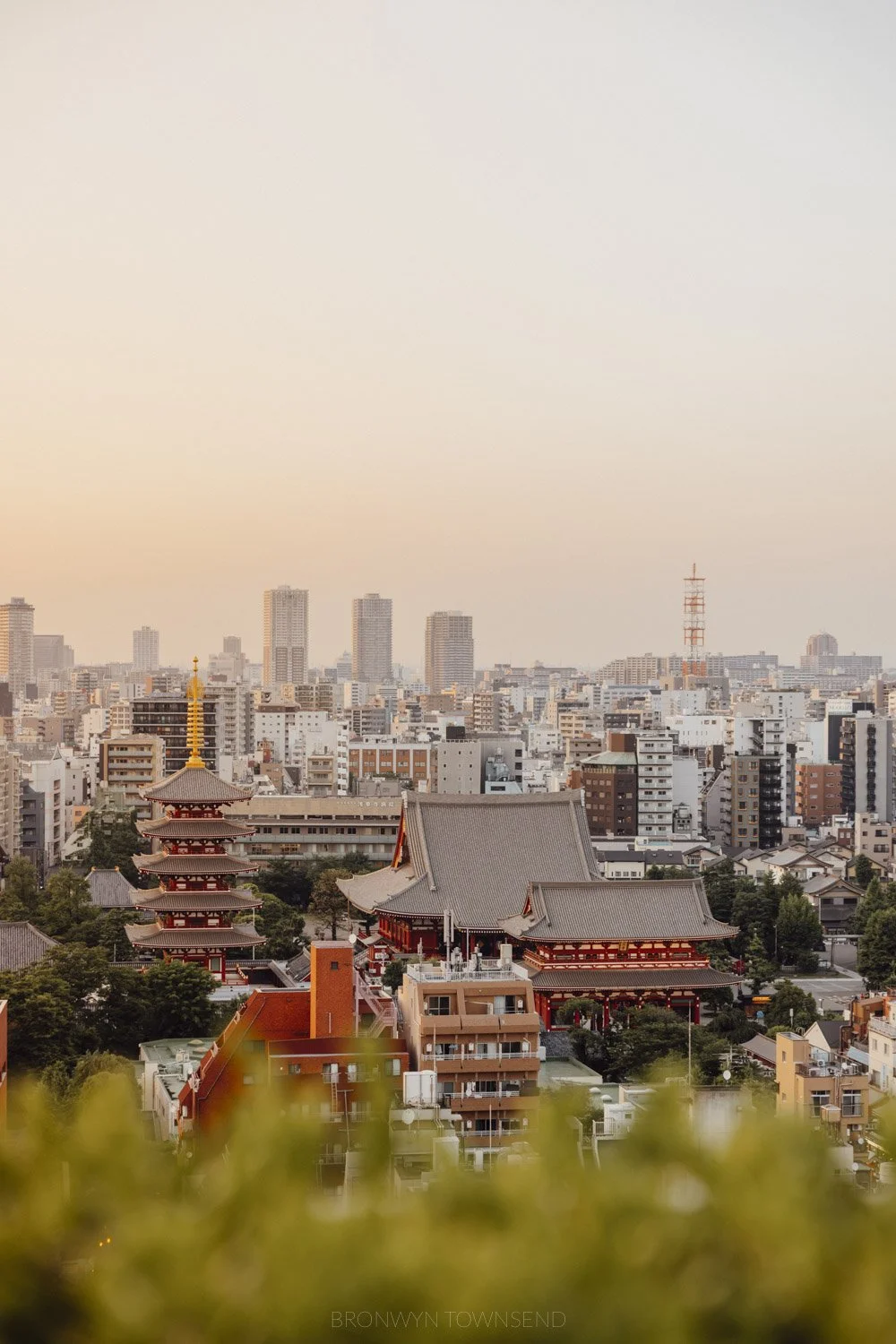
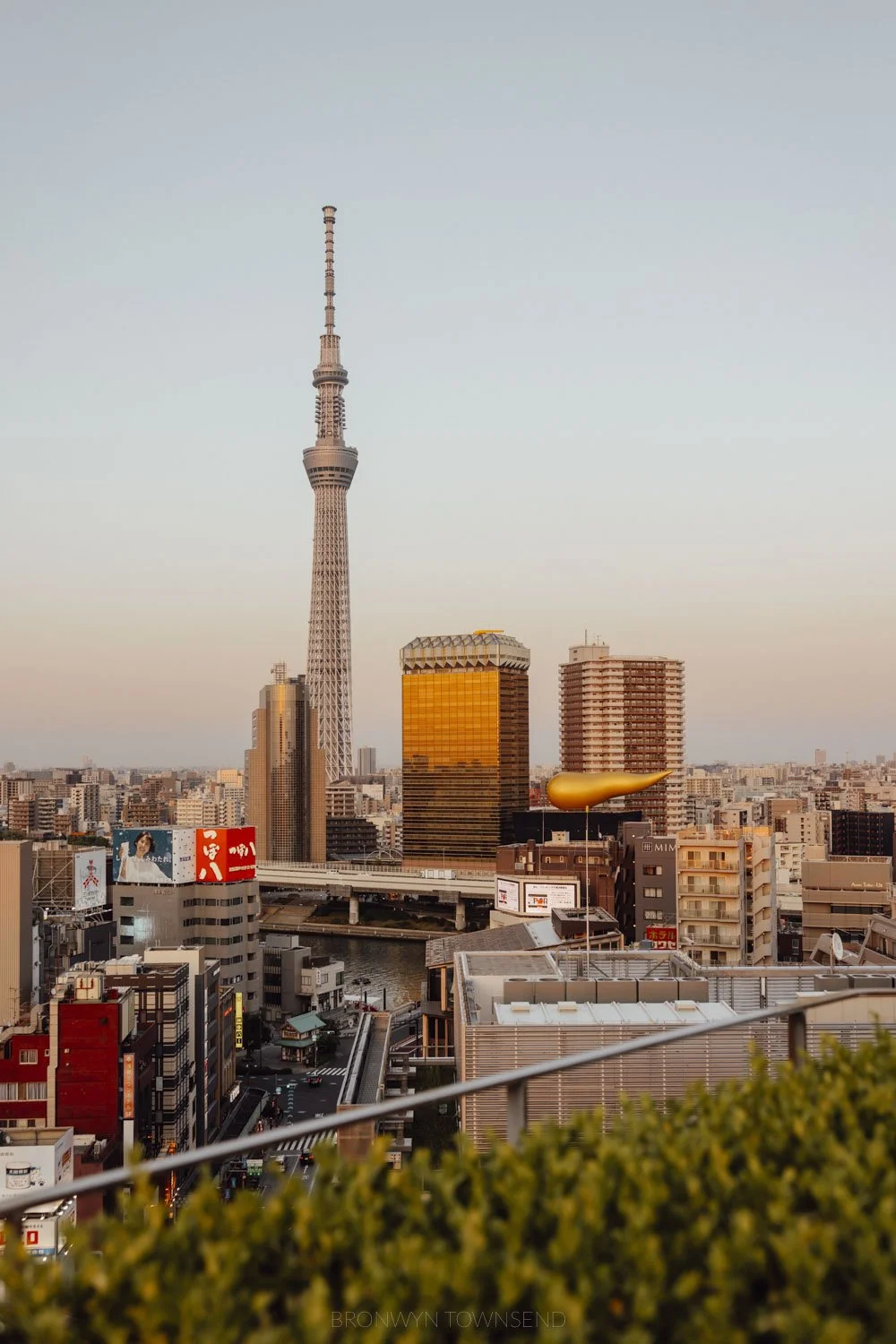
Asakusa | Best for cultural stays and old-Tokyo charm
One of my favourite neighbourhoods to stay in Tokyo is Asakusa. Home to some of the city’s oldest samurai districts and the iconic Sensoji Temple, it offers a more cultural feel. However, this doesn’t mean it’s a quiet area. It’s a popular tourist spot and does come with crowds throughout the day, however it’s both convenient and gives you the advantage to explore early right on your doorstep.
Asakusa is otherwise generally laid-back and doesn’t feel as overwhelming as areas like Shibuya and Shinjuku. The area has access to four metro stations, including the Tobu Skytree Line, the Toei Asakusa Subway Line, the Tokyo Metro Ginza Line, and the Tsukuba Express (TX) Line, which makes it perfect for getting around the city as well as taking a day trip for Nikko.
Asakusa is a great area to stay in Tokyo for families, cultural enthusiasts looking for a more traditional atmosphere, and it’s my top pick in East Tokyo. Nearby, you can easily visit nearby attractions including Kappabashi Kitchen Street and the Kuramae, a cool neighbourhood full of design studios and great cafes.
The Gate Hotel Kaminarimon by Hulic | I stayed here recently and it might be one of the top hotels in Tokyo yet. Located across from Sensoji Temple, the rooms were spacious with a walk-in shower (not common in Japanese hotels) and left plenty of room to unpack. The guest-only rooftop bar is perfect for a drink at sunset overlooking the Tokyo skyline, and it’s excellent value for money for a mid-range budget.
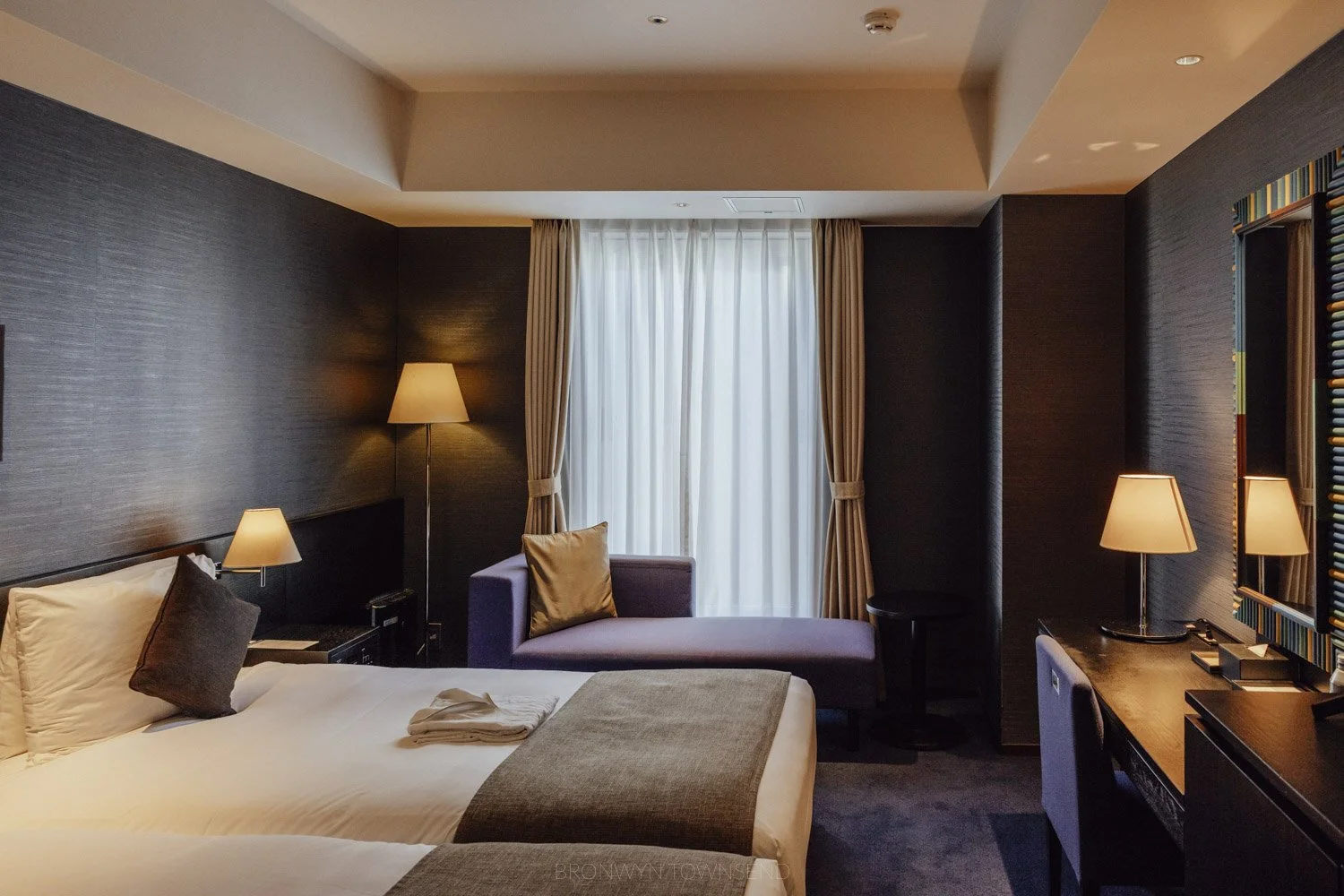
My room at the Gate Hotel Kaminarimon by Hulic
OMO3 Asakusa by Hoshino Resorts | I really like this property from the Hoshino Group and have stayed in several of their hotels from Okinawa to Hokkaido. The Asakusa branch is inspired by the traditional design of ryokans with a contemporary approach and it has a great rooftop bar, as well as brilliant views over Sensoji Temple.
PROSTYLE RYOKAN TOKYO ASAKUSA | Right by Sumida Park and the Sumida River, this hotel leans into Asakusa’s traditional side. Marrying traditional Japanese ryokan design with contemporary touches, rooms have tatami mat floors and minimalist details. There is a communal sento (similar to an onsen), and some rooms have a private bath or sauna and balcony.
B:CONTE Asakusa | If you’re looking for a hotel with a kitchenette or washing machine in-room, then this is my preference. With a mix of queen, king, and triple rooms, there are also one-bedroom apartments giving you plenty of space. Right in the heart of Asakusa, it’s perfect for travellers who prefer to self-cater.

Shibuya | Best for first-time travellers
If it’s your first time in Tokyo, Shibuya is a popular choice for many travellers. However, I have to admit I’ve never stayed here, mostly because other areas personally appeal to me more. So how do you know if it’s for you?
The area has a youthful energy that can’t be beaten with hundreds of restaurants, cafes, and shops. It’s most famous for the iconic Shibuya Crossing, and its skyline is filled with modern skyscrapers that tower over the pedestrians below. So it can feel like life is always dialled up when you step out in Shibuya.
But there’s also a quieter, more laid-back side to Shibuya which makes it a great choice for those who want the best of both worlds. The ward also encompasses some of my favourite, cool neighbourhoods like Meguro, and Daikanyama, which are full of boutiques, great coffee shops and a slower side to the city. Daikanyama has a village-like feel to it and is home to a fantastic bookstore, T-Site.
Shibuya has great public transport connections, including the metro and it’s on the Yamanote Line which follows a ring around Tokyo and will connect you to most of the areas you’ll visit as a tourist in the city.
Shibuya is a great choice for first-time travellers, those who want to enjoy Tokyo’s nightlife, and young travellers, but consider the areas quieter side if you want to be close but are looking for something more low-key.
all day place shibuya | In a convenient location in central Shibuya, all day place is a contemporary hotel with a fresh, sleek design. Rooms are on the smaller side, but it’s ideal for travellers wanting to make the most of Shibuya’s shopping, dining, and nightlife. If you plan to be out all day and are looking to be central, then this is a well-placed option.
TRUNK(HOTEL) YOYOGI PARK | A great addition on the doorstep of Yoyogi Park, TRUNK is an ultra-chic boutique hotel with one of the only infinity pools in Tokyo and sweeping views across green spaces. The neutral interiors are gorgeous and have a sustainability focus. I am itching to stay here at some point, on my never-ending list of hotels to try in Japan.
Tokyu Stay Shibuya | This is one of my tried and trusted hotel groups in Japan, especially because they usually have a washing machine in the room, which makes packing light a lot easier. They also offer family rooms, which can sleep up to six people making it ideal for families or groups.
Hotel Vintage Tokyo Meguro Fudomae | This hotel has recently made it onto my ‘places to stay in Tokyo’ list, because it’s close to a couple of neighbourhoods I love and I’m a big fan of the room styling. With a mid-centuryesque vibe, in-room washing machine, and a restaurant on site, as well as just a short walk from Ebisu station, I’m hoping to spend a few nights here soon. It ticks all the boxes!
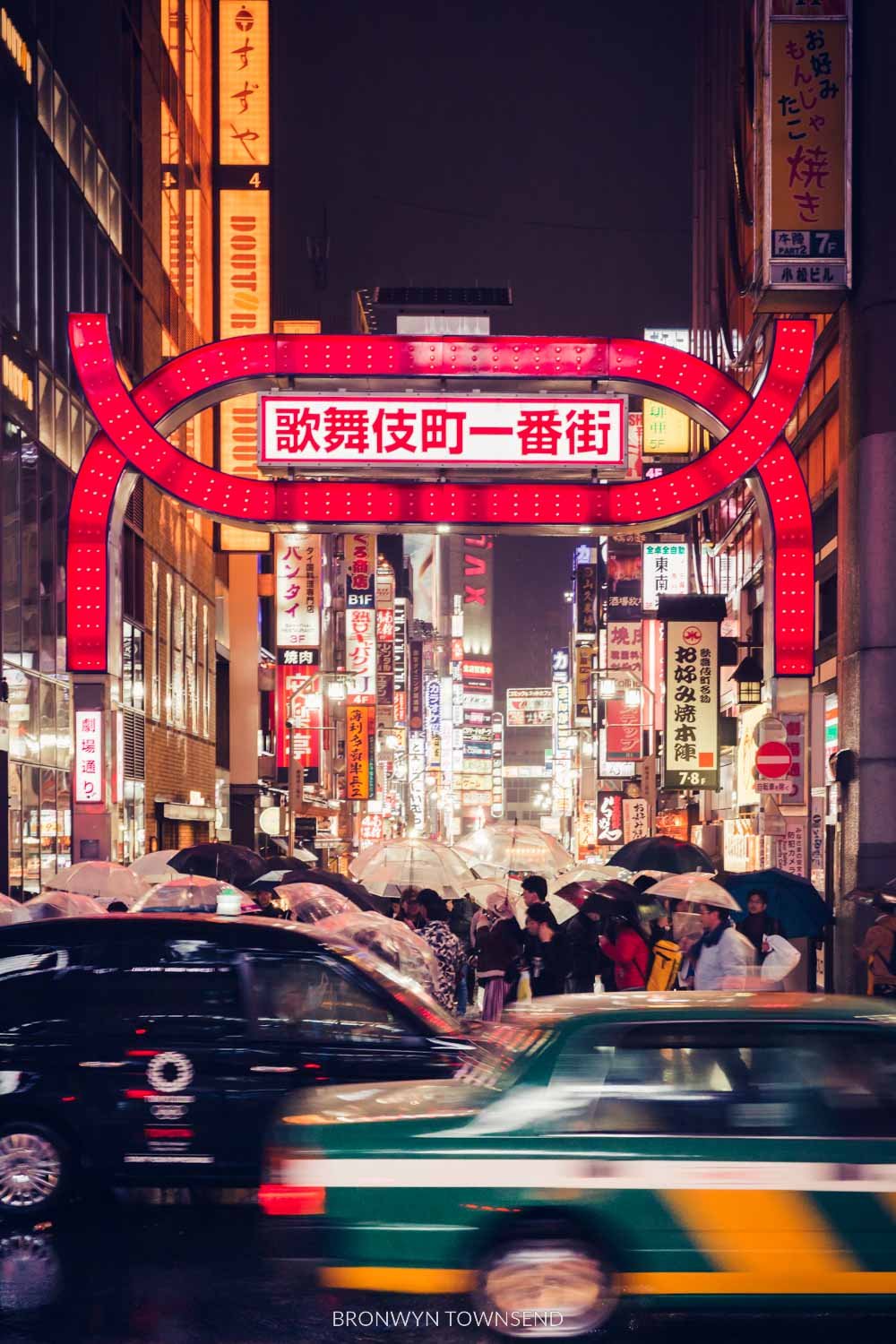

Shinjuku | Best for nightlife
I’ve stayed in Shinjuku twice. It’s not for everybody, and it’s not my first choice, but it is perfect for some. The pros? Shinkjuku is a great choice for convenience if you plan on taking day trips to places like Kawaguchiko. Dining options are endless, from the lantern-lit Omoide Yokocho to high rises stacked with restaurants 10 storys atop of eachother.
If you’re looking for nightlife there’s Golden Gai and Kabukicho Tower, or for quieter moments head to Shinjuku Gyoen National Garden. Nearby, you can also head to the Tokyo Metropolitan Government Building, where you can take in panoramic views from the observation decks for free.
The cons? During the day, the area is a busy business district, but by night the neon-tinted scenes of Kabuchiko are the scenes Tokyo is known for. It’s busy, crowded, and a sensory overload - but can be a whole lot of fun too. Though this isn’t what everyone wants from their Tokyo stay.
Shinjuku is a lively neighbourhood and best suited to those who want to be close to the action. If you plan on enjoying nightlife on your trip, then Shinjuku is a great area to stay. If you’re looking for somewhere quieter, Asakusa or Shimbashi would be a better fit without giving up great dining.
Tokyu Stay Shinjuku Eastside | I stayed at this hotel for a few nights, and it was super convenient. It’s within walking distance of a metro station (so no need to get lost in Shinjuku Station) and on a quieter side of Shinjuku. I love staying at Tokyu Stay properties because they have an in-room washing machine and microwave which is super convenient.
ONSEN RYOKAN YUEN SHINJUKU | A great option if you’re looking for a ryokan-inspired stay in Tokyo. Minimalist-style rooms have tatami floors and natural wood finished to create a serene atmosphere. The rooftop onsen is a highlight, and there’s a great restaurant and tea lounge on site.
HOTEL GROOVE SHINJUKU | Just steps from some of Shinjuku’s top spots, this hotel is bold in design with everything you could want to be comfortable. There’s a rooftop bar with city views and it’s ideal for lively travellers.
Kimpton Shinjuku Tokyo | A luxury boutique hotel with larger-than-average rooms by Tokyo standards, the Kimpton is a top choice for comfort-conscious travellers. In a prime location with a rooftop bar and rooms with a view, it’s a top choice in this popular area of Tokyo.

Tokyo Station or Ginza | Best for shopping, luxury hotels, and shinkansen travel
If you’re planning on a lot of shopping, especially high-end or luxury, or you want convenient connections to cities using the shinkansen (Japan’s high speed rail), then the area around Tokyo Station or nearby Ginza are ideal.
The area around Tokyo station is mostly a business district, but it’s also a great pocket with its fair share of historical significance. One of Tokyo’s iconic landmarks is the beautifully restored red-brick facade of Tokyo Station, dating back to 1914. Inside the station you’ll find a wealth of stores and dining options including the stretch known as Character Street and Ramen Street - it’s a world of its own in there!
By contrast, Ginza is polished and appeals to those in town for shopping. You’ll find many of the high-end luxury brands here, as well as Japan favourites including Uniqlo’s 12-story flagship store and GU. Ginza is also popular for foodies, and it’s within walking distance of Tsukiji outer market - a must-visit
Hotel Intergate Tokyo Kyobashi| I stayed at this hotel when I only had a brief two-night stop before heading further afield to Nagano for a winter trip in the alps. The rooms are simple but ideal if you are looking for a short stay within walking distance of Tokyo station. There is a great communal space and the bed was super comfortable - exactly what I needed after a long flight and to fight to jet lag.
Mitsui Garden Hotel Kyobashi | This is one of my favourite and trusted hotel chains across Japan, and this hotel located just a 5-minute walk from Tokyo Station is perfect for those wanting to be close to the shinkansen. Rooms are sleek and modern, and you can enjoy complimentary happy hour snacks and drinks in the lounge.
Four Seasons Hotel Tokyo at Marunouchi | A five-star hotel with panoramic views, this is a truly luxurious property just moments from Tokyo Station. There’s a brilliant restaurant on site, as well as a full-service spa, a top-tier fitness centre, and a concierge service.
MUJI HOTEL GINZA | Still on my to-stay list, this hotel embodies everything we love about Japanese brand, Muji. A lesson in Japanese minimalist design, it features natural wood and stone finishes throughout, perfectly balancing style and functionality.
Hotel GrandBach Tokyo Ginza | Inspired by the music of composer Johann Sebastian Bach, this elegant hotel is exactly the sort of place you’d expect in Ginza. Rooms are designed for encouraging relaxation with soothing colour palettes and high-end amenities, and it also includes a fine-dining restaurant serving both Japanese and Western cuisine.


Shimbashi or Hamamatsucho | An underrated neighborhood perfect for foodies
I stayed in Shimbashi the first time I visited Tokyo and it’s somewhere I’ve found myself returning to over the years. It has everything I love about Tokyo, without the tourist hype. By day, you’ll find it bustling with commuters and salarymen on their way to work, but come evening it’s a foodie hotspot.
If you want to go where the locals do, then Shimbashi is home to plenty of izakayas and small bars tucked away in traditional laneways, which can feel like a surprising find among the modern buildings in the area.
Shimbashi also gives you more bang for your buck, making it a great value option if you’re a budget-conscious traveler or want your money to go further. It’s also on the Yamanote line and perfectly placed to jump on a train to Yokohama or Kamakura for a day trip from Tokyo without the need to switch lines.
HOTEL 1899 TOKYO | I stayed at this beautiful boutique hotel focused on minimalist interiors and built around the concept of tea last summer. Rooms are designed with a serene ambience in mind and you can enjoy tea-tasting experiences at the green tea cafe on site. It was quiet and tucked away from the hustle and bustle, but a short, easy walk from Shimbashi station. Rooms are standard size for Tokyo hotels, but the service was excellent and I always felt super relaxed ending the day here.
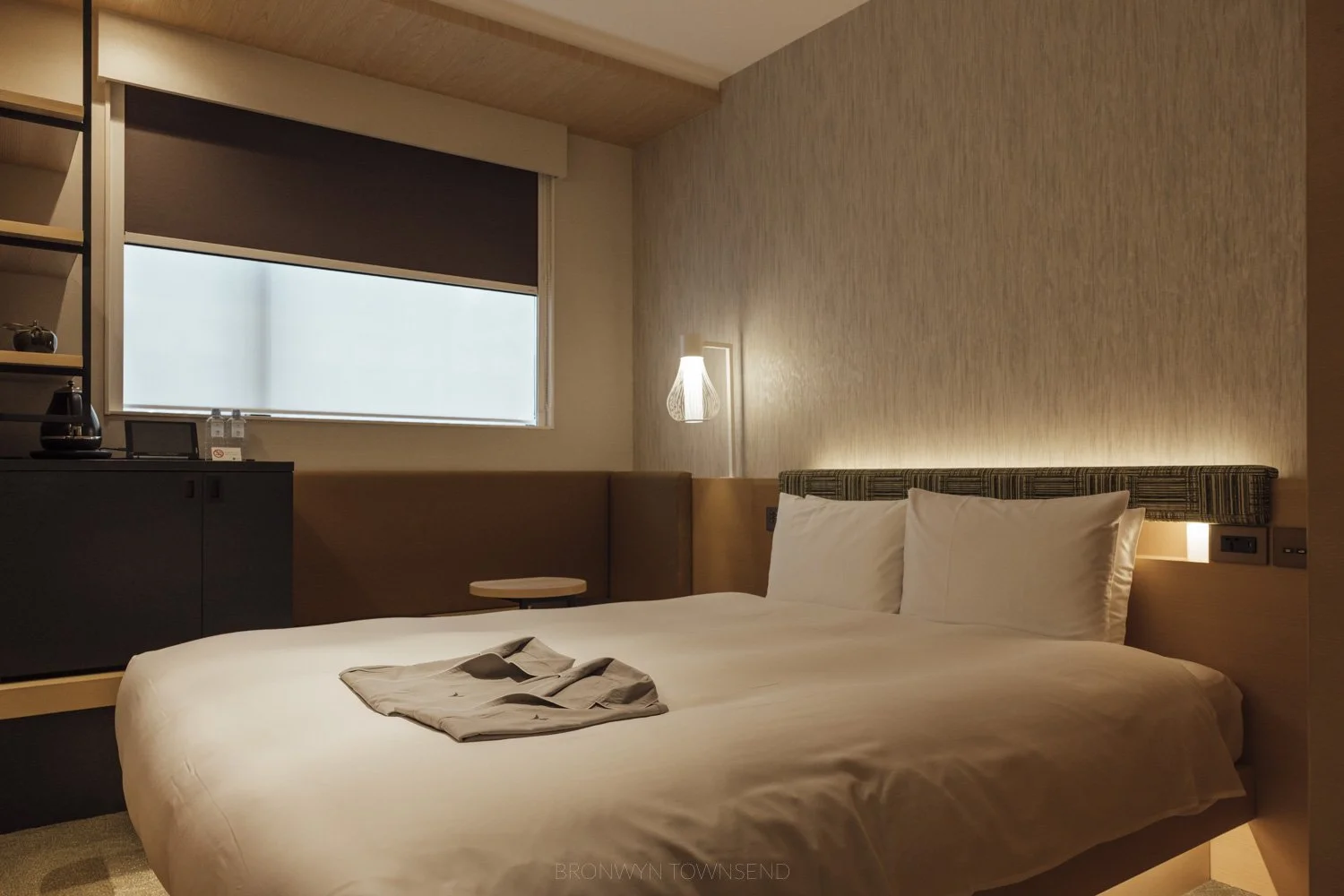
My room at Hotel 1899 Tokyo (I loved that the lampshades were matcha whisk-shaped!)
Candeo Hotels Tokyo Shimbashi | I stayed here on my first trip to Tokyo and it was a great base for a week in the city. Enjoy buffet breakfasts, and onsite wellness and spa centre, and the onsen is the perfect place to unwind after a day of exploring. The Candeo Hotel is a chain found across Japan and has a good reputation as suiting both business and holiday travellers.
Park Hotel Tokyo| This art-led design hotel has spectacular panoramic views and each room features a unique artistic design. It’s just a 5-minute walk from Shimbashi station and on a clear day you can spot Mt Fuji from some rooms.
THE BLOSSOM HIBIYA | A luxury hotel that blends modern design with Japanese elegance, The Blossom Hibiya is close to the Imperial Palace. The standout feature is the ceiling-to-floor windows that overlook the Tokyo skyline. There are also lots of facilities such as a fitness centre and lounge, along with bike parking and luggage storage.
Section L Hamamatsucho | If you’d prefer a bit more space or a self-contained stay, then this apart hotel is perfect. I spent a week in one of the studios here last summer and having a kitchen, dining space, and washing machine made it perfect for a longer stay. I also had a view of Tokyo Tower from my room, which I loved seeing lit up every night. Just past Shimbashi in Hamamatsucho, the closest station is Daimon Station on the Asakusa and Odeo metro lines, or Hamamatsucho on the Yamanote line.

Izakayas in Shimbashi
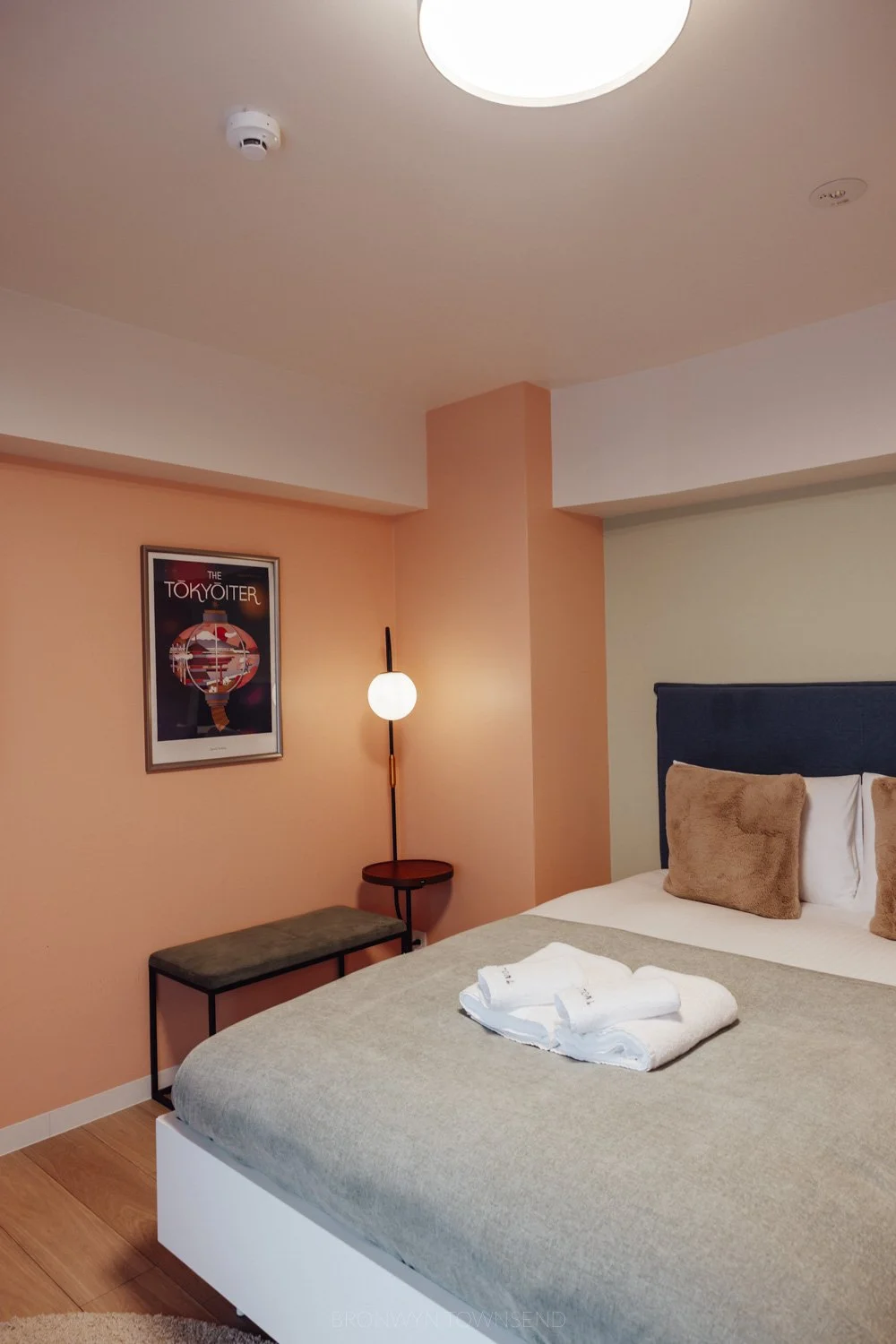
My apartment at Section L Hamamatsucho
MORE USEFUL GUIDES FOR PLANNING YOUR Japan TRIP
Make sure you’re prepared with this list of essential things to know before visiting Japan
Get an idea of what to budget for 2 weeks in Japan
Is the JR Pass worth it? Find out whether it’s right for you
How to stay connected in Japan: Is eSIM or pocket wifi best?
Accommodation guides | Where to stay in Osaka / Best hotels in Hiroshima / Where to stay in Kanazawa / Hotel Review: BYAKU Narai
Seasonal packing guides |Japan winter packing list / What to pack for Autumn in Japan
Itineraries |10 days in Japan / 5 days in Tokyo / 5 days in Kyoto / 2 days in Hiroshima

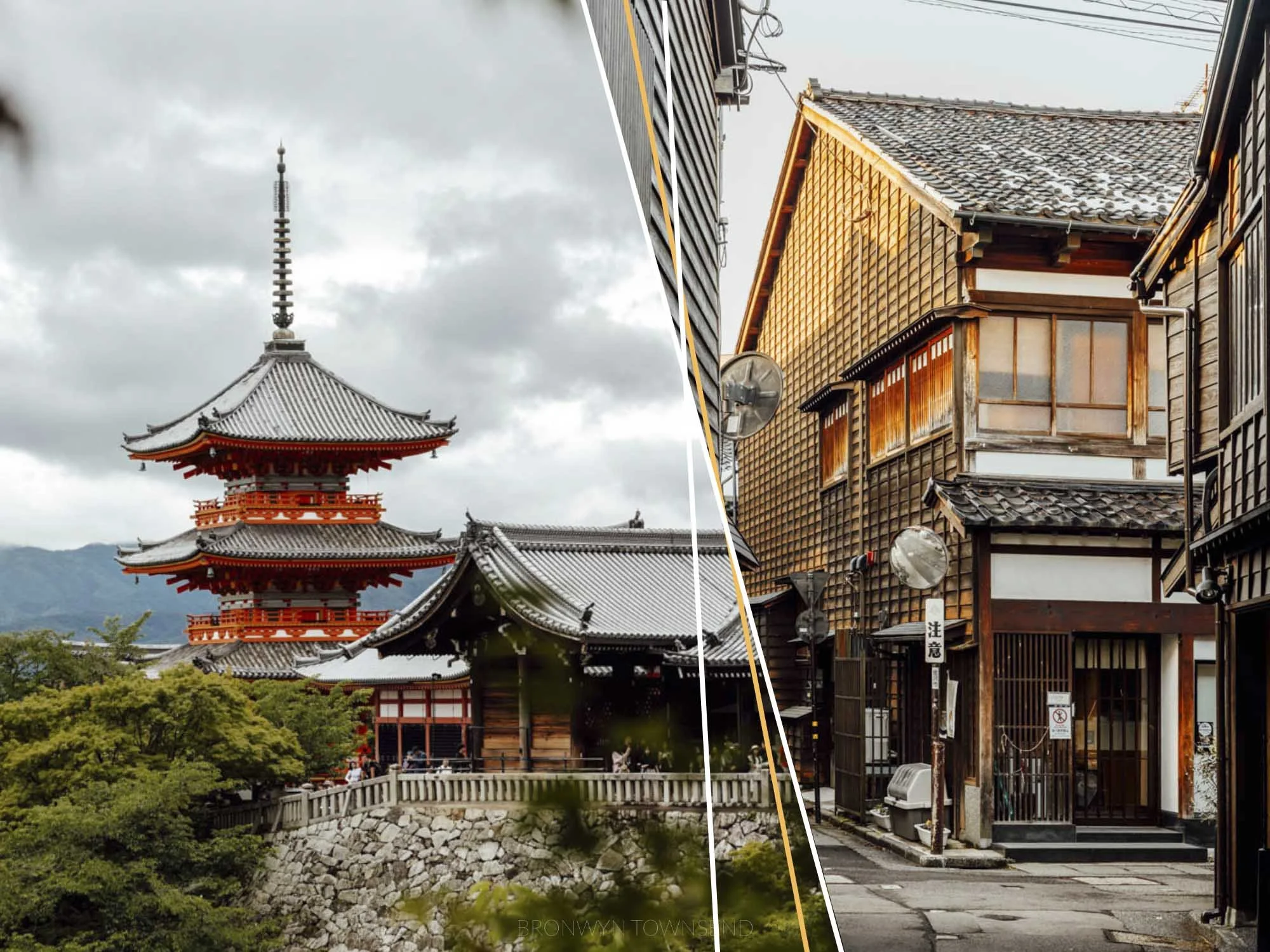
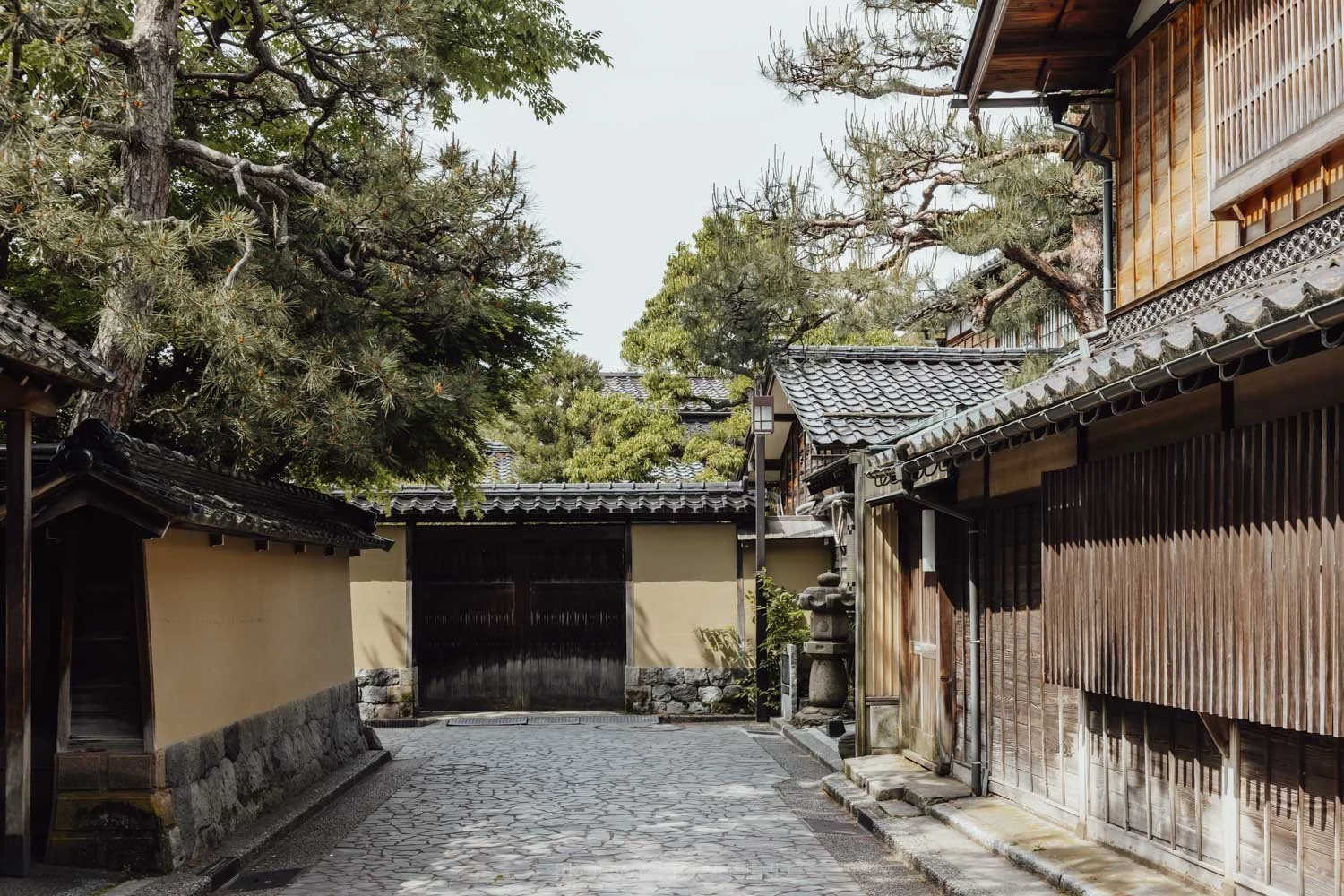


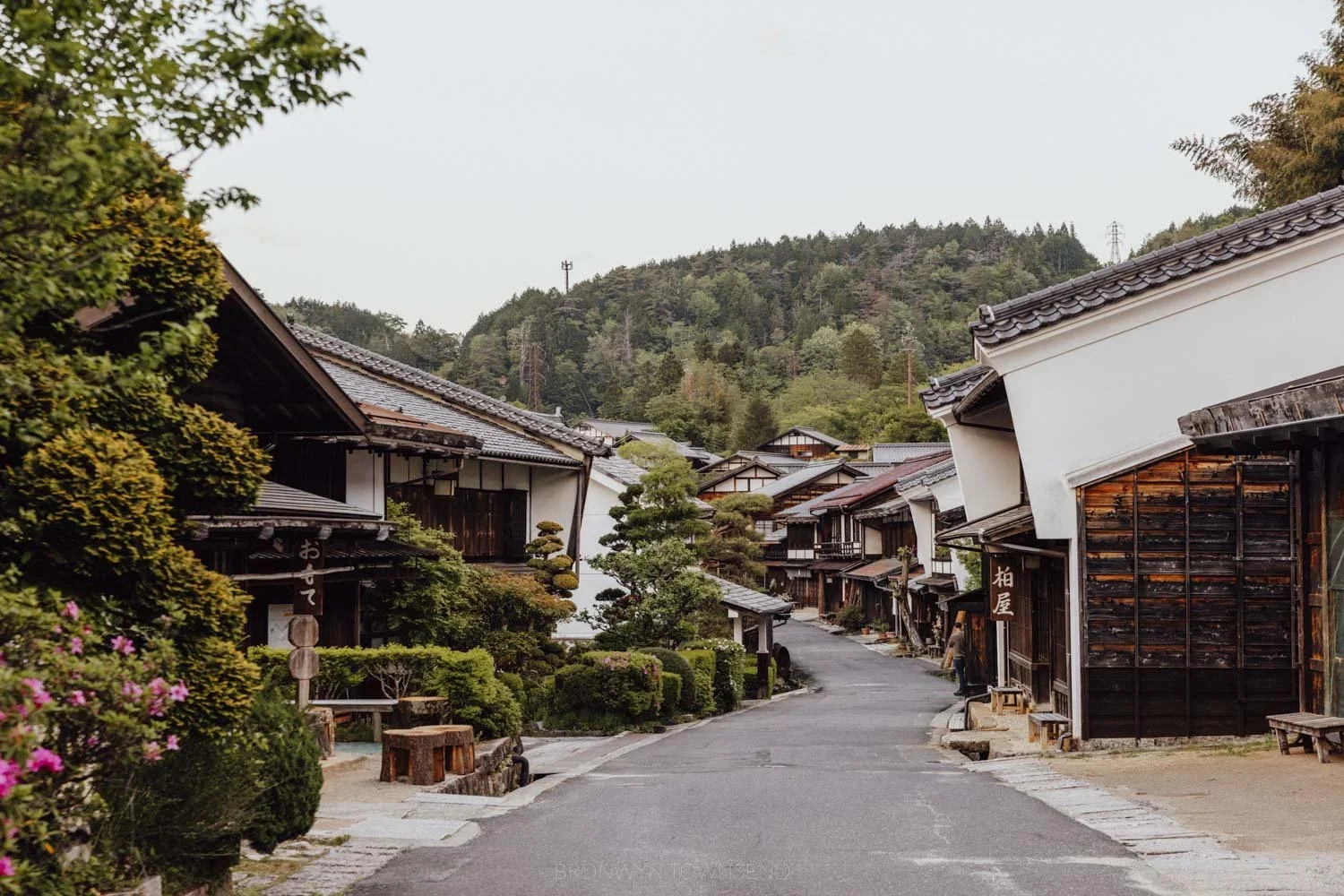


Take the confusion out of where to stay in Tokyo with this comprehensive guide to the best areas and hotels in Japan’s capital with recommendations.