Where to Stay in Kanazawa: Hotel and Area Guide 2026
Centuries-old teahouse districts, a storied past under the rule of the Maeda Clan, and one of Japan’s most revered gardens are just a few of the reasons to stay in Kanazawa. Discover the best areas and hotels wxith this personally curated Kanazawa accommodation guide.
This post may contain affiliate links.
If you choose to purchase I may receive a small commission at no additional cost to you. By using these links, you are supporting the ability for me to continue creating content for this site and its running costs.
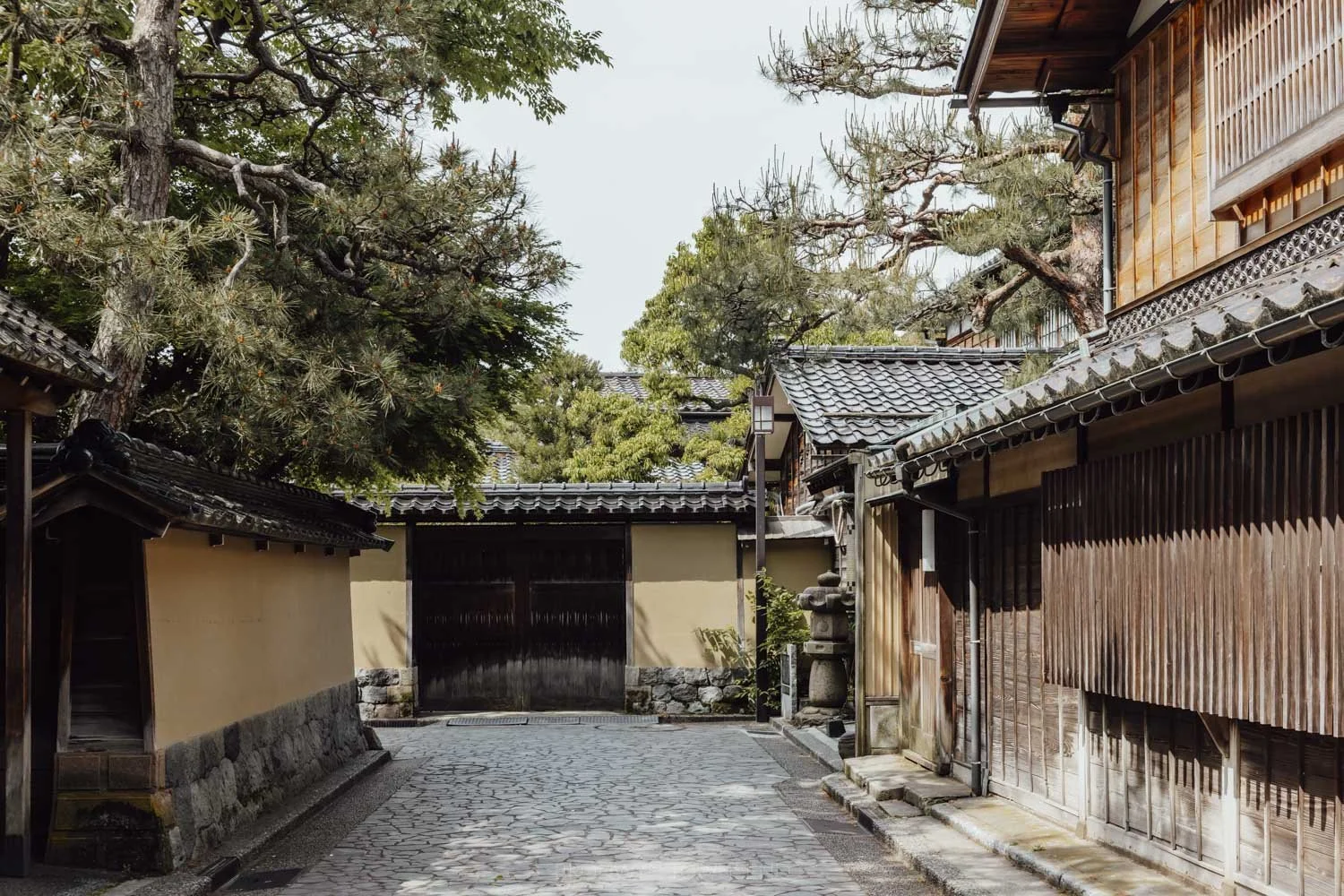
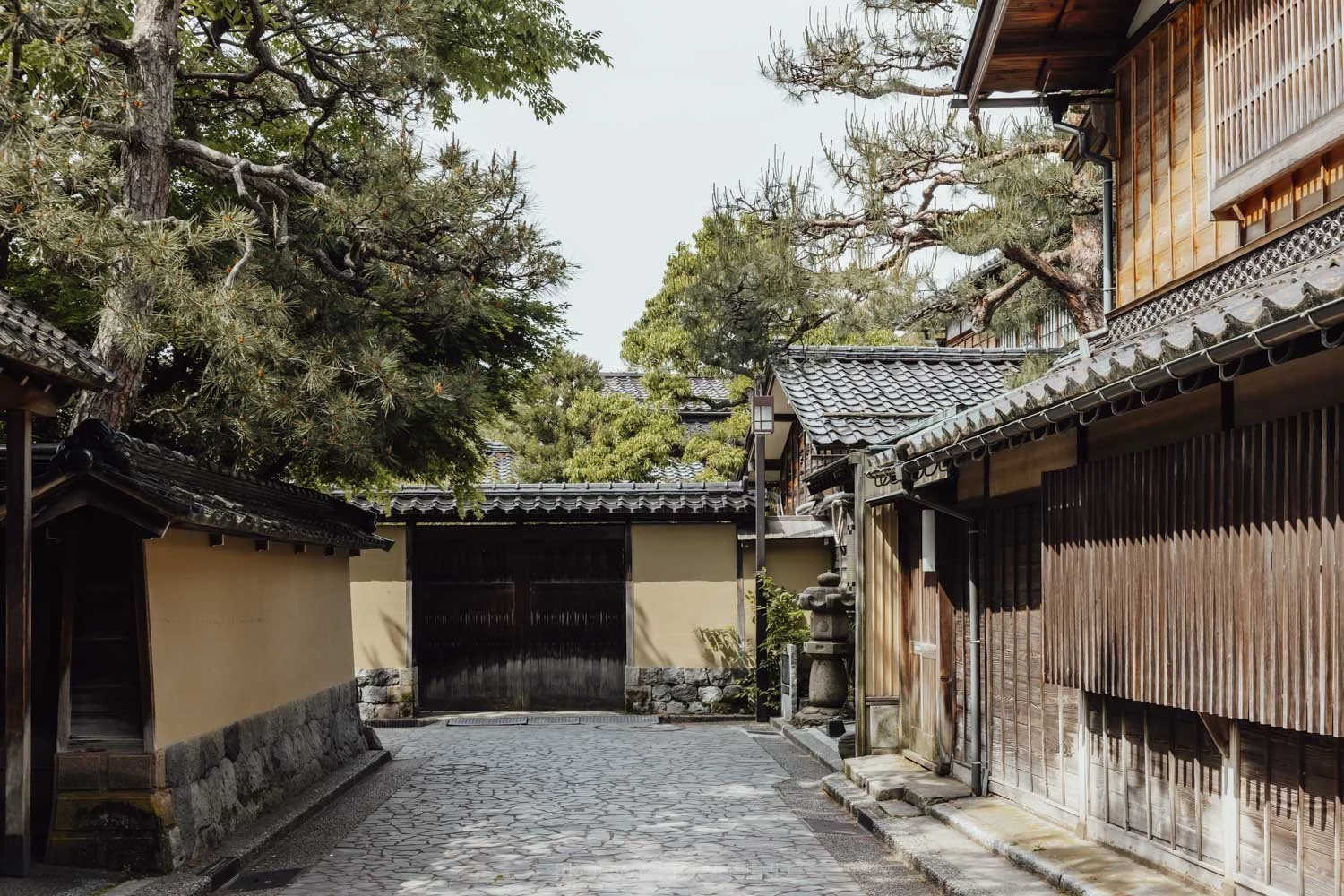
Kanazawa is fast becoming a hotspot among those in-the-know and looking to step away from Japan’s traditional Golden Route. Framed by the Sea of Japan and the Central Alps, the capital of Ishikawa was spared during World War II, leaving historic geiko districts flanked by wooden machiya and a samurai district tucked between earthen walls and pines.
If you’re planning to spend a couple of days in the city (and you should!), you might be wondering where you should stay. The city is compact compared to destinations like Tokyo and Kyoto, with three key areas I’d recommend visitors to stay; Kanazawa Station Area, Omicho Market Area, and Downtown Kanazawa (encompassing Korinbo and Katamachi).
After multiple visits and working on a city guide (to be published later this year), I’ve spent enough time there to help you plan where to stay in Kanazawa. In this curated guide, I’ve detailed the areas that are best suited to travellers, what each region offers, and the hotels I’d personally recommend or have stayed at.
In a hurry? My top picks for the best place to stay in Kanazawa
SOKI Kanazawa | For the best central hotel with a boutique feel
HOTEL AMANEK Kanazawa | For the best-value hotel in Downtown Kanazawa
Korinkyo | For the best boutique, luxury hotel
黒梅屋 Kurumiya | For the best ryokan experience, within walking distance of key attractions
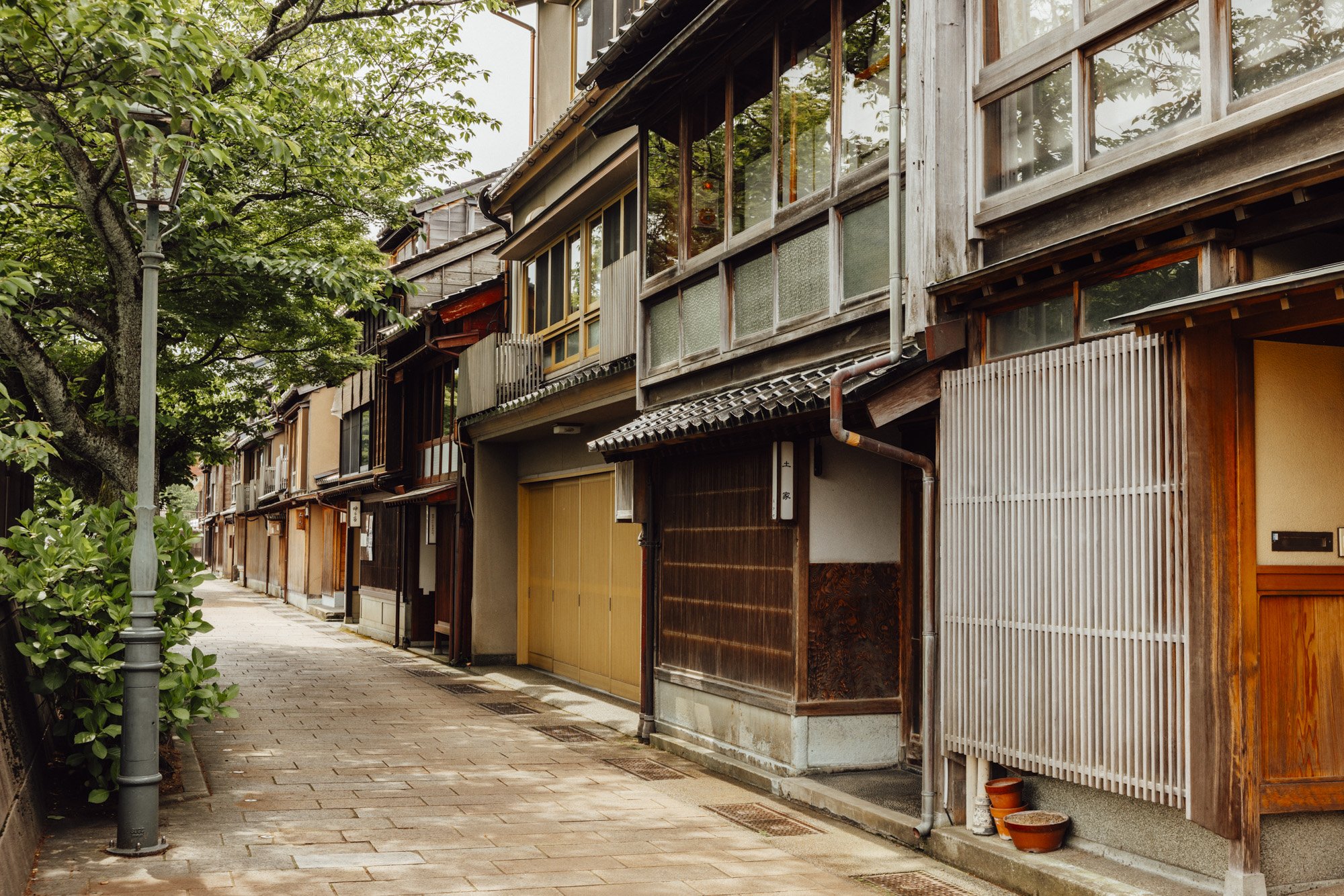
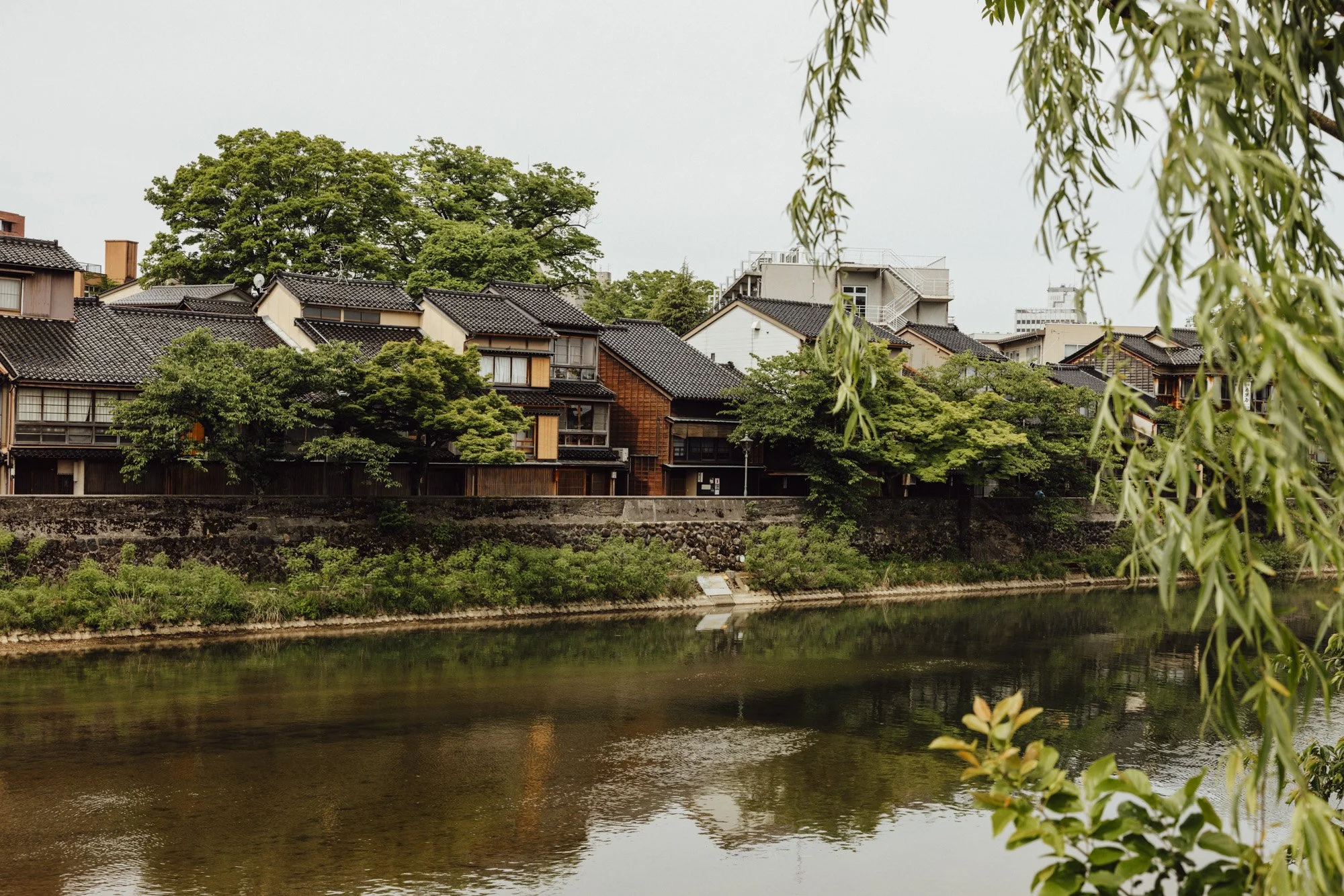
Kazuemachi Teahouse District.
Kanazawa Station Area
Best for: first-time visitors, short stays, rail travellers, and convenience-focused travellers
Serving as the gateway to Ishikawa, Kanazawa Station is easily and quickly connected to Tokyo and Nagano via the Hokuriku route, and it’s the most practical place to stay, especially for visitors arriving by shinkansen or planning day trips into the Hokuriku region. Like many of Japan’s larger city stations, it’s a destination in its own right with dining, shopping, and the dramatic Tsuzumi-mon gate and airy wooden concourse.
Staying near Kanazawa Station means seamless arrivals and departures via train, as well as direct access to buses that connect to major sights within the city, from Kenrokuen Garden to the Nagamachi Samurai District. It’s also a great base for travellers visiting Shirakawa-go, Takayama, or the Noto Peninsula.
The compromise for convenience and practicality is that this area lacks the character and charm that make Kanazawa the incredible destination I’ve come to know and love. If you’re planning to spend more time exploring the sights of Kanazawa, then I would recommend one of the other areas I discuss in this guide. However, for travellers who plan to use Kanazawa as a launchpad to other destinations in the region and take a lot of day trips, then Kanazawa Station and its surrounds are a great option.

Hotel Nikko Kanazawa | One of the most popular choices for accommodation near Kanazawa Station, Hotel Nikko offers high-floor rooms with a view overlooking the city and larger deluxe rooms if you would like more space. Super conveniently located opposite the station, the hotel has either dining options and shops on-site, making it super convenient if you want to prioritise sightseeing during your stay. Check rates and availability for Hotel Nikko Kanazawa.
Hotel Torifito Kanazawa | Very close to Kanazawa Station, but far enough to feel like you aren’t in the station, this hotel offers a relaxed space with fresh, modern interiors. Great if you’re planning to visit areas nearby via train, guests also love the breakfast. There is a public bath (sento) for guests, however, double check room sizes before booking if you need more space. Check rates and availability for Hotel Torifito Kanazawa.
Daiwa Roynet Hotel Kanazawa Eki Nishiguchi | Just a 3-minute walk from Kanazawa Station, this is well-located for travellers wanting a base for day trips by train. A popular hotel chain in Japan, I’ve stayed in Daiwa Roynet properties across the country and am always happy. Rooms are well-appointed and modern, with large suites available at a great price point. Higher rooms also offer views across Kanazawa and the surrounding landscape. There is also an Italian restaurant on site if you need something after a long day of travel. Check rates and availability for Daiwa Roynet Hotel Kanazawa Eki Nishiguchi.
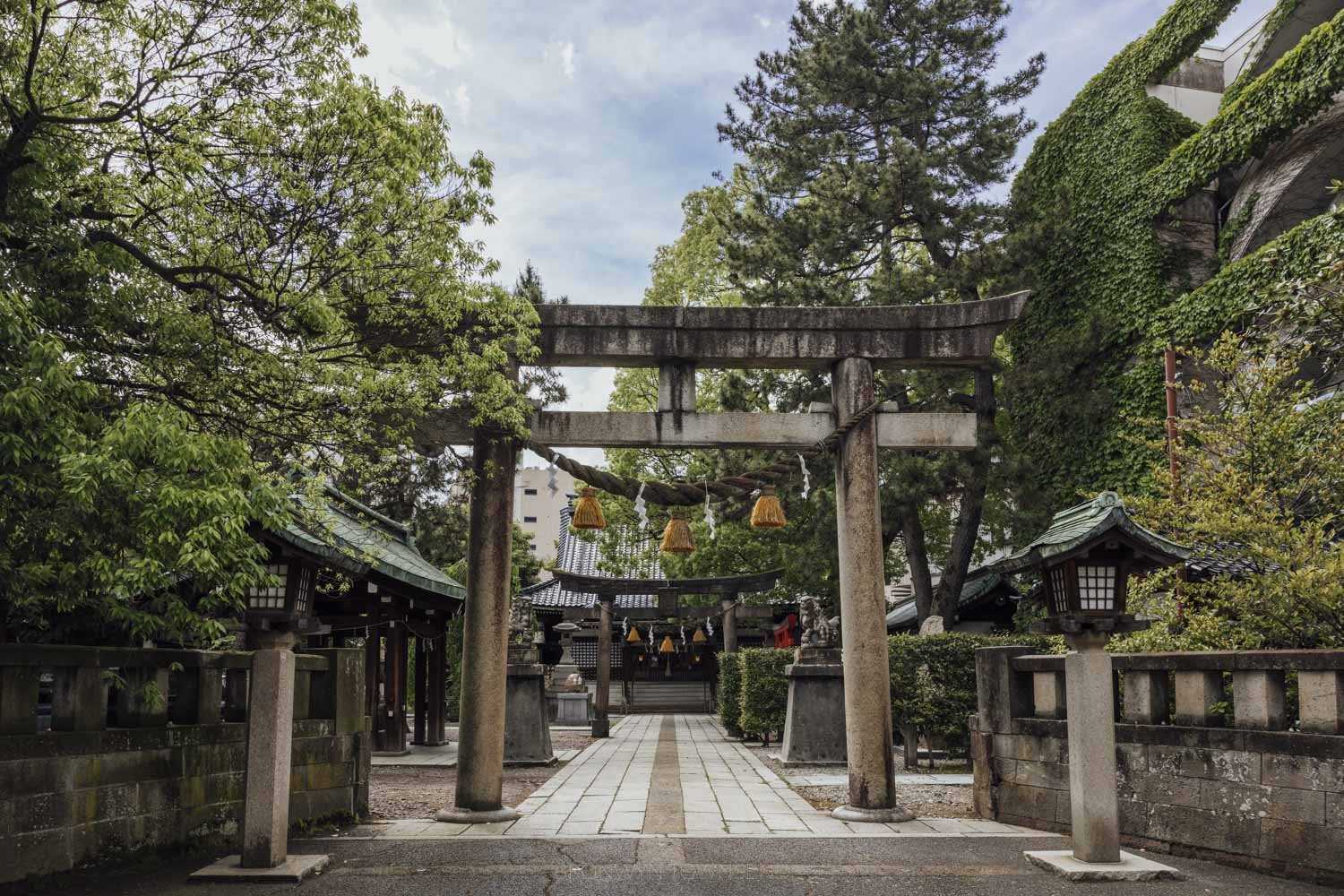
Yasue Hachimangu, one of Kanazawa’s Great Shrines.
Omicho Market Area
Best for: food lovers, cultural travellers, and walkers who want to stay central
The Omicho Market area places you at the city’s culinary heart and it’s my top choice when I return to Kanazawa. This is a go-to destination as it puts you at the centre of everything Kanazawa has to offer, it’s within walking distance of many of the city’s top attractions, and is perfect for foodies.
Staying near Omicho Market allows you to experience it both at its busiest and at its most atmospheric, early in the morning before tour groups arrive. It’s also just a hop, skip, and a step from some of my favourite restaurants and coffee shops in Kanazawa.
Sitting at a natural crossroads, Kanazawa Castle, Kenrokuen Garden, and the Higashi Chaya District are all within walking distance, making it an excellent base for travellers who prefer to explore on foot. However there is also a bus stop right outside Omicho Market, with the loop bus stopping here, making getting around the city simple and convenient.
Accommodation here tends to be smaller-scale and more varied, from boutique hotels to traditional inns, and evenings are quieter than in the nightlife districts.


SOKI Kanazawa | A serene, design-forward hote that combines authentic Japanese design principles with modern comfort. Located opposite Omicho Market, the hotel’s design celebrates regional craftsmanship and the city’s Kaga culture that is evident throughout, including the zen public bathhouse built with local Takigahara stone. SORASIO, the on‑site restaurant, offers a seasonal menu of locally sourced ingredients — especially seafood from the nearby Omicho Market. Check rates and availability for SOKI Kanazawa.
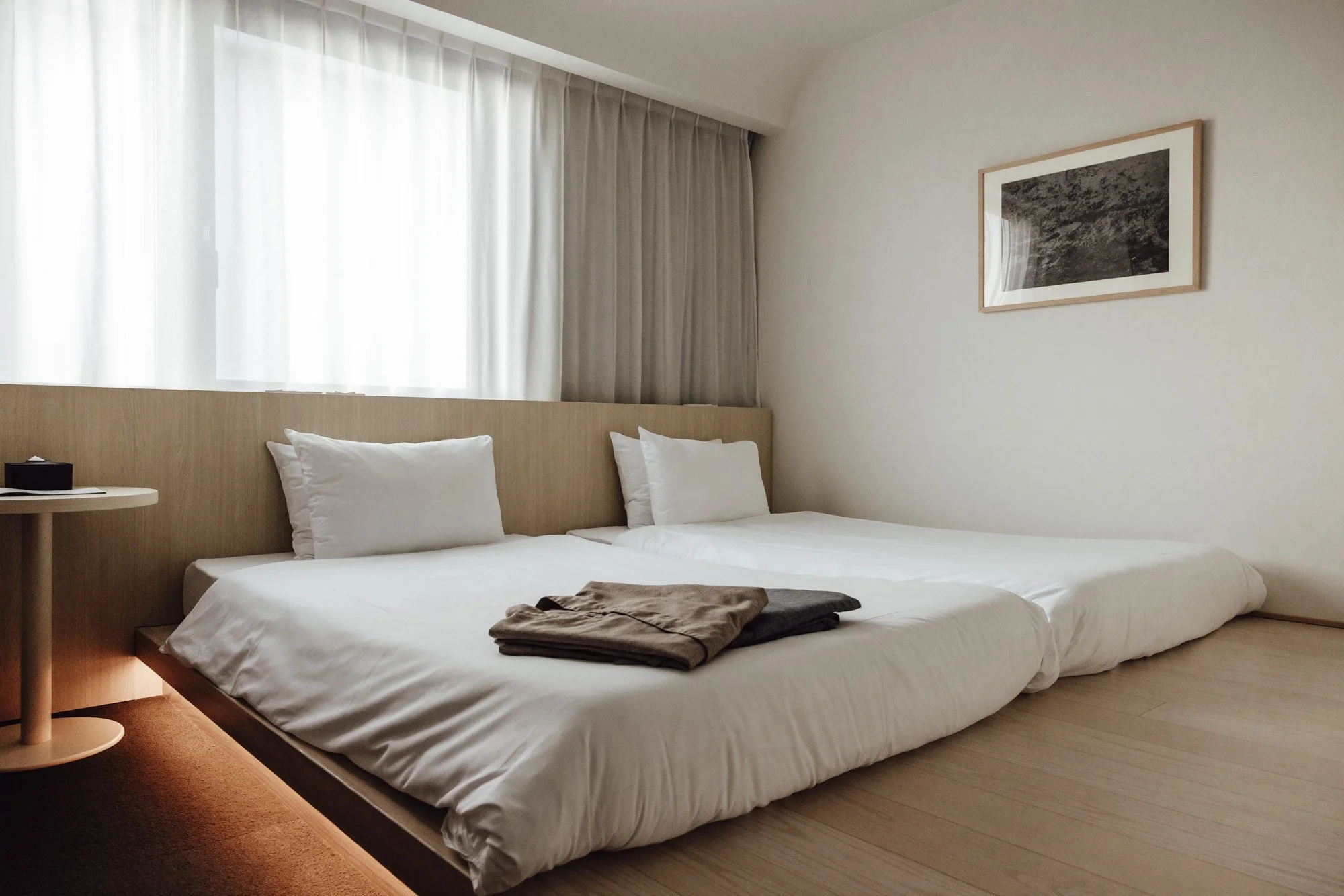
Japanese-style room at SOKI Kanazawa.
The Square Hotel | This is one of the best value hotels in Kanazawa if you want to be central, have access to amenities such as a sauna, public bath, and free use of bicycles, and a great price. I’ve stayed here twice now because the location is ideal, with most attractions being no more than a 15-minute walk in any direction, around the corner from Omicho Market, and public transport just a 2-minute walk away. Check rates and availability for The Square Hotel.
Hotel Kanazawa Zoushi | Blending traditional Japanese details with modern hotel conveniences, this hotel is ideal for those who don’t want to stay in a western-style room but aren’t looking for a Ryokan experience either. Located a short walk from Omicho Market, it’s also less than 10 minutes on foot to Kanazawa Station. Honouring local Kaga crafts like Kutani ware and washi paper, the details give them hotel a very boutique feel. Check rates and availability for Hotel Kanazawa Zoushi.
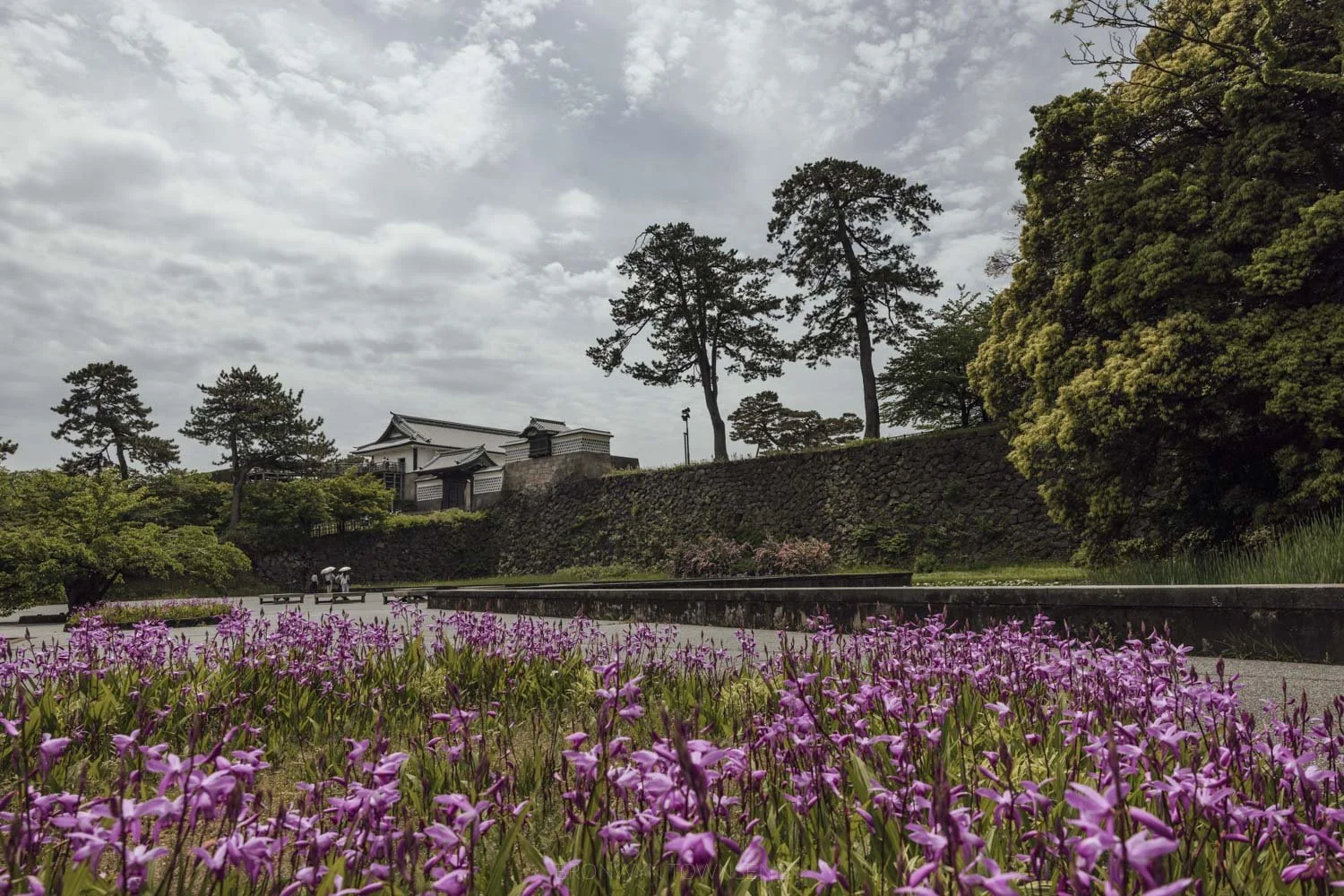
Kanazawa Castle Park.
Downtown Kanazawa
Best for: nightlife seekers, shoppers, and urban-minded travellers
Korinbo and Katamachi form Kanazawa’s modern downtown, the hub for nightlife, dining, and shopping. More modern than Higashi Chaya or near Omicho Market, the area has a high concentration of accommodation options from budget-friendly hotels to boutique properties and well-known international chains.
Despite its modernity, downtown remains well connected to Kanazawa’s historic attractions. Kenrokuen Garden and Kanazawa Castle are both within walking distance, and the tourist loop bus operates frequently to the station and other key things to do in Kanazawa. If you’re looking for where to stay in Kanazawa that offers plenty to do in the evening, then this is the place for you.
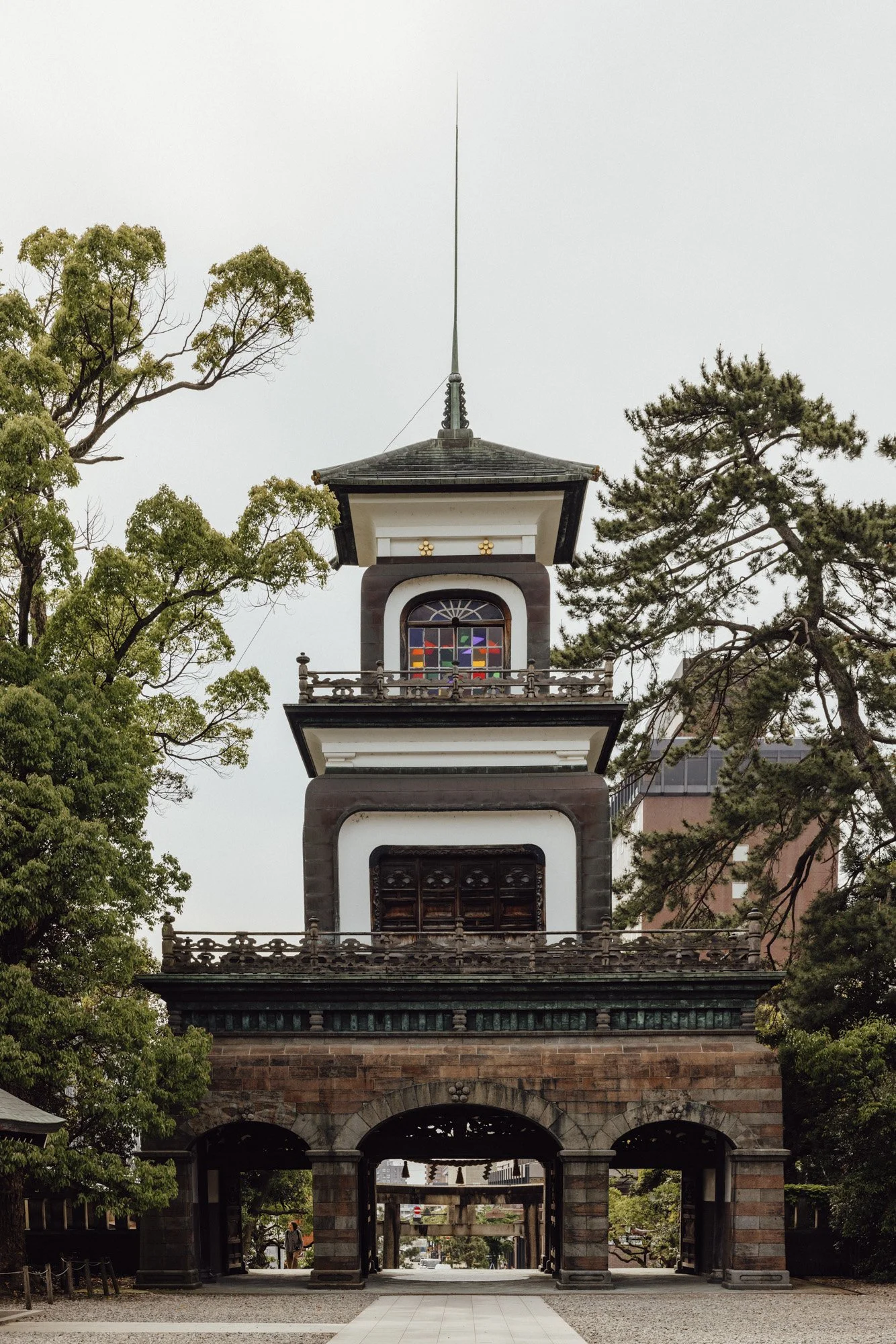
Oyama Shrine Gate.
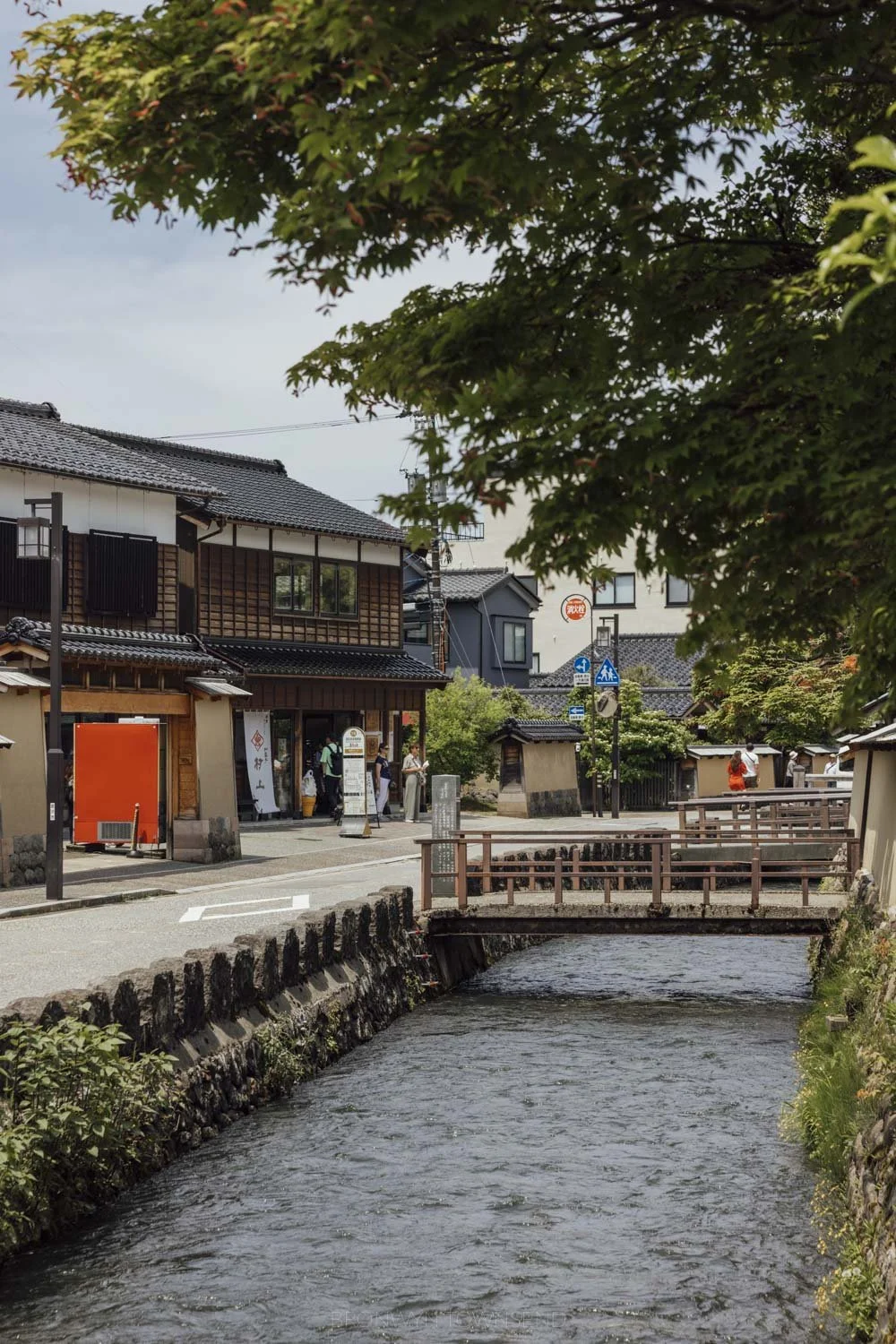
HOTEL AMANEK Kanazawa | Close to the Nagamachi Samurai District and Oyama Shrine, this modern hotel seamlessly combines Japanese and Western design details for a calming and comfortable stay. Rooms have a warm, minimalist feel and are offered in both Japanese and Western styles, and there is an indoor public bath for guests to enjoy. Family rooms are available and can sleep up to five people.There is also bike hire, and the lounge offers complimentary snacks and drinks. Check rates and availability at HOTEL AMANEK Kanazawa.
Kaname Inn Tatemachi | Located in the heart of Katamachi, this small hotel is a great mid-range option if you want to be centrally located. Rooms are modern and some offer small kitchenettes. Downstairs, Kanazawa Music Bar is a great, relaxed cocktail bar and dining space where DJs spin records every evening – I loved unwinding with some house-special cocktails before dinner here. The hotel is also just a 6-minute walk from the 21st Century Museum of Contemporary Art. Check rates and availability at Kaname Inn Tatemachi.
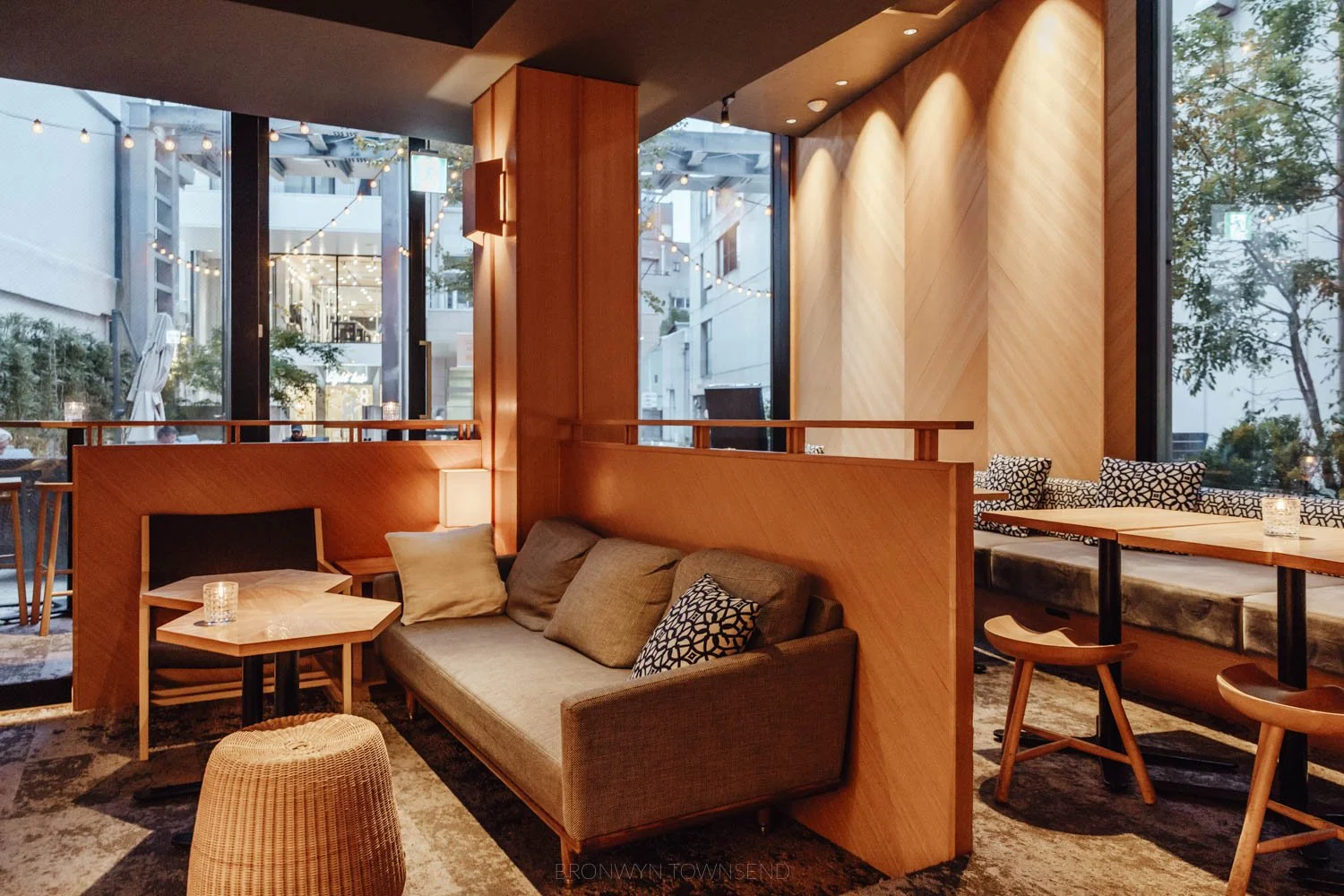
Lounge and Bar, Kanazawa Music Bar, at Kaname Inn Tatemachi.
Minn Kanazawa | Located on one of the main roads in the downtown area, this hotel is modern, comfortable, and just moments from a bus stop on the sightseeing loop route. Rooms are a blend of Japanese and Western-style formats, and there are also family rooms and apartment options for those in need of more space. Check rates and availability at Minn Kanazawa.
Korinkyo | If you’re looking for something unique, then this former art gallery turned hotel is perfect. With just 18 rooms, it’s discreet and styled with a minimalistic vision and attention to detail. Some rooms feature arched floor-to-ceiling windows from the building's original design, and you can book use of the two hinoki cypress baths on the open rooftop. A complimentary Taiwanese breakfast is served daily, and the ground floor is home to a perfume distillery, so take advantage and pick up some of their incredible products. Check rates and availability for Korinkyo.
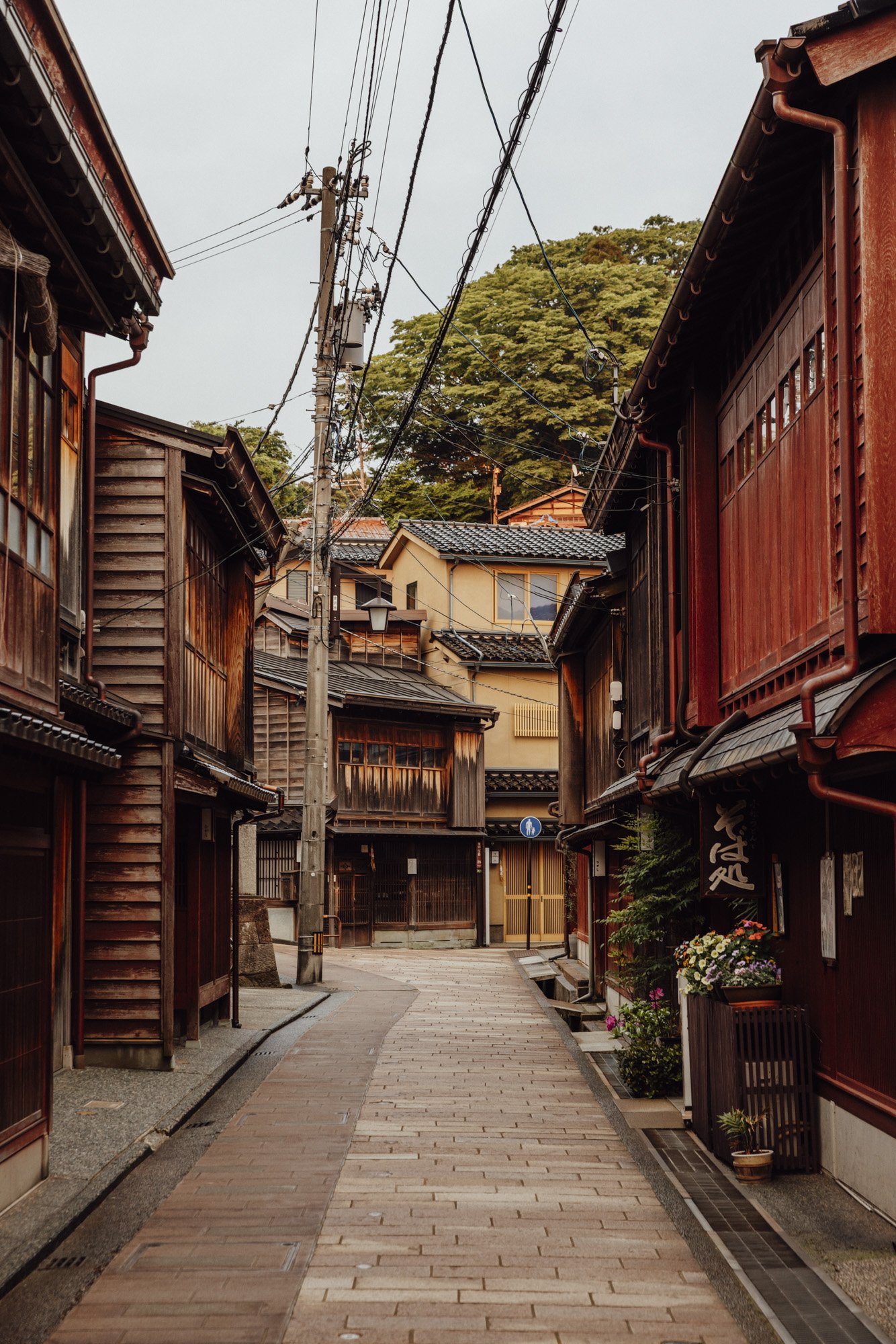
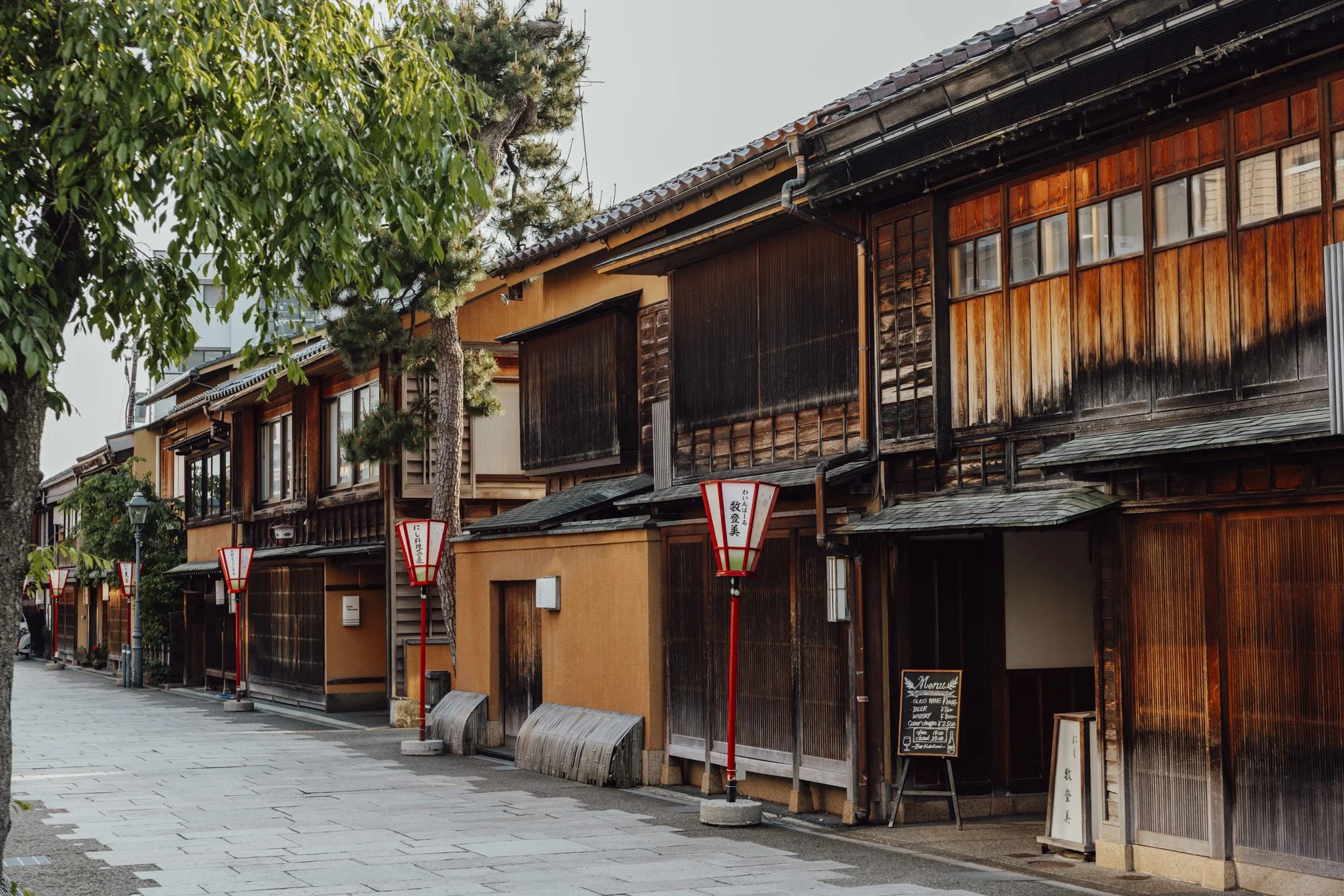
Streets of Higashi Chaya.
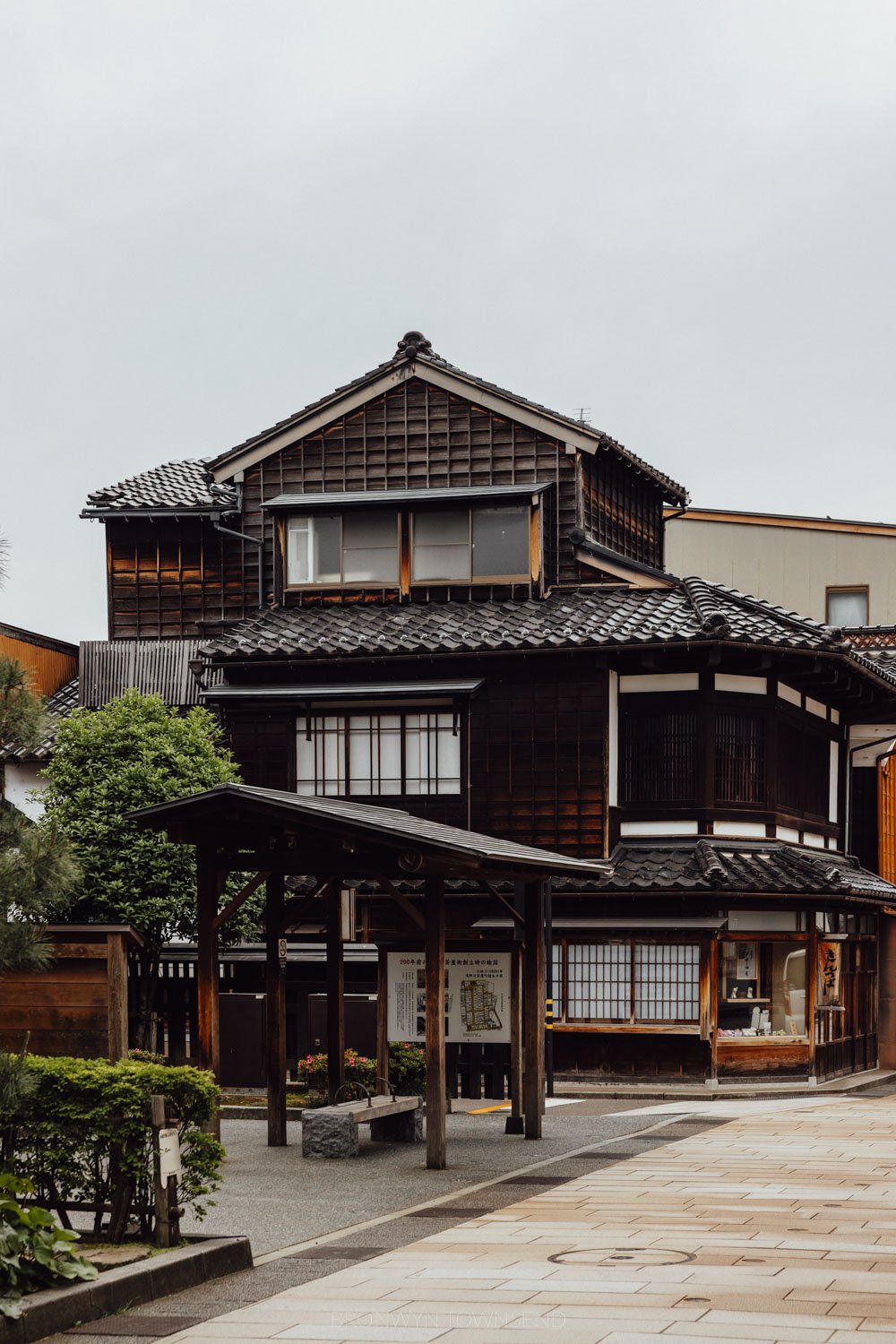
Higashi Chaya, Kanazawa.
Bonus: Higashi Chaya
Best for: atmosphere seekers, cultural travellers, and romantic stays
This beautifully preserved teahouse district is the epitome of cultural travel for visitors to Kanazawa. Previously the largest hub dedicated to geiko (the regional title for geisha) entertainment, it’s characterised by narrow streets, wooden latticed buildings, and trailing willows. Staying here offers an opportunity to experience this district as it’s most serene.
Among its teahouses, craft shops, and gold-leaf ateliers, visitors can step back into Edo-era Japan. Evenings here are notably calm and early mornings are especially rewarding for traveller’s wanting to immerse themselves in the historic atmosphere.
Accommodation in Higashi Chaya leans toward small-scale, character-rich stays. There are but a few options, mostly comprised of traditional ryokans, renovated townhouses, and intimate boutique hotels. Dining options are more limited than in downtown areas, but thoughtfully chosen and often refined. This is also one of the most expensive areas to stay in Kanazawa.
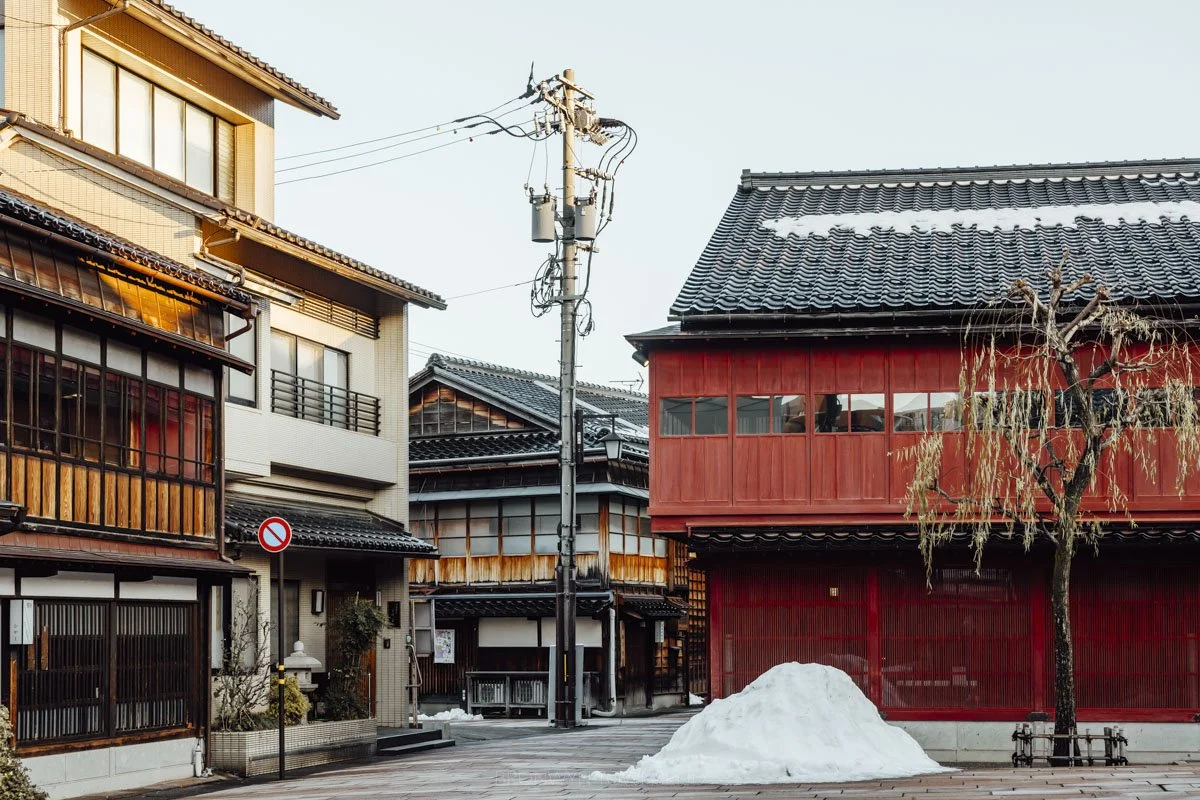
Maki No Oto Kanazawa | Tucked away right in the heart of the largest of Kanazawa’s teahouse districts, this adults-only 4-star hotel has just four rooms, offering an intimate and refined stay. With two Japanese-style and two Western-style rooms, each has a living space and bath, and some include kitchenettes. The historic Highashi Chaya is on your doorstep, offering a unique opportunity to stay in this atmospheric corner of Kanazawa. Check rates and availability at Maki No Oto Kanazawa.
Yamanoo | For a more traditional option in Higashi Chaya, this ryokan-style property is perched on a hill overlooking the tea district. An adults-only hotel, you can experience a stay in one of only four rooms, sleeping on futons, with tatami floors and a private onsen in your room. There is also an excellent kaiseki dinner based around seasonal, local ingredients, and a traditional Japanese breakfast. Check rates and availability for Yamanoo.
Hotel Rashiku Kanazawa | Blending in with the traditional wooden machiya that line the streets of Higashi Chaya, this hotel has a more modern style than others in this area. It’s also the best value option if you want to stay in the heart of this historic geiko district. Designs are inspired by the local crafts of Kanazawa, and each of the hotel’s 15 rooms are individually decorated to give a unique stay.
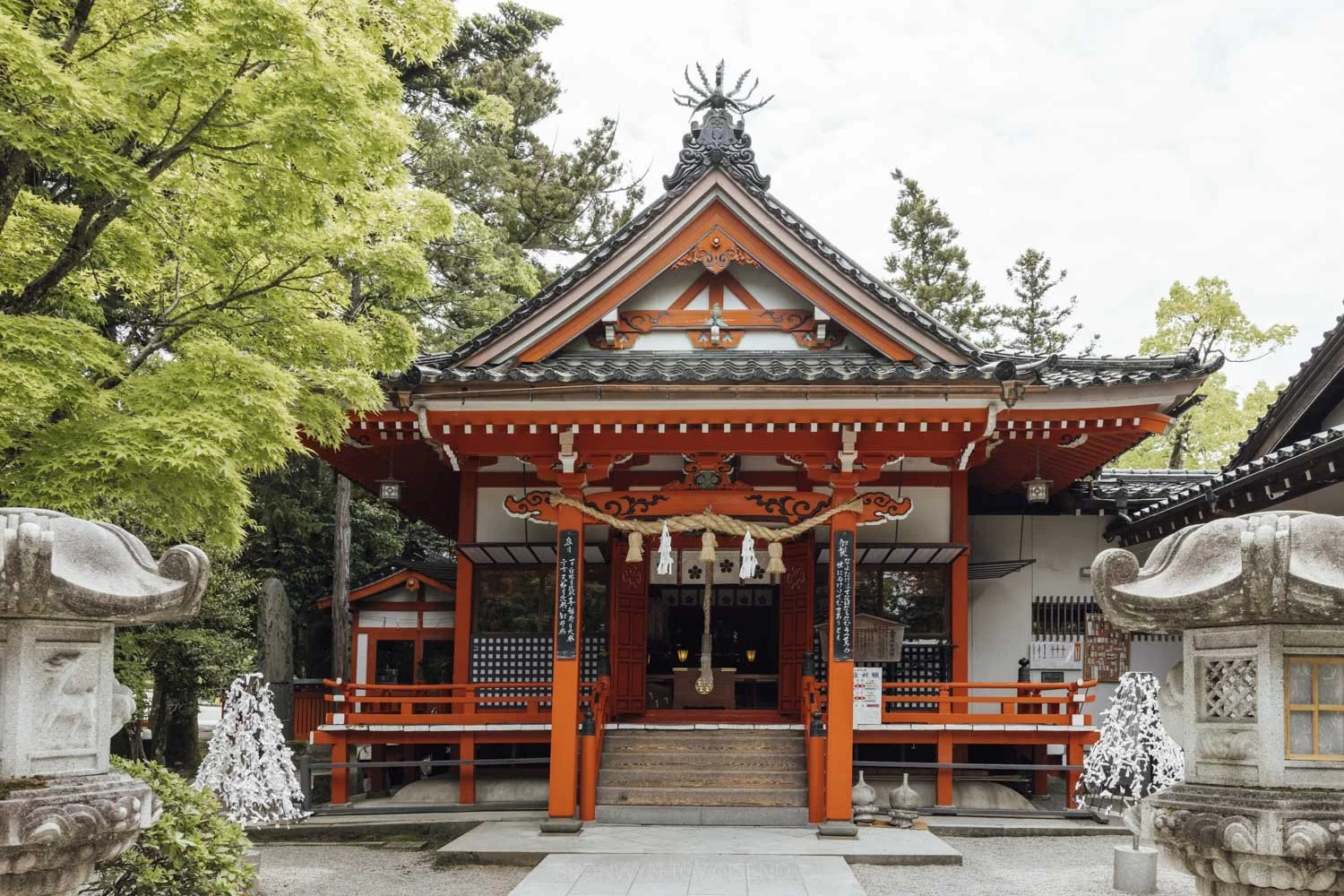
Kanazawa Jinja Shrine, near Kenroku-en Garden.
Ryokans in Kanazawa
You’d be right to assume there is traditional Japanese inn-style accommodation in Kanazawa. If you are looking to stay in a ryokan while here to experience what I consider to be a quintessential Japan trip moment, then these are some of the best options for Kanazawa Ryokans.
黒梅屋 Kurumiya | Located between the Omicho Market and Higashi Chaya areas, this modern ryokan has a considered design with warm wood finishes and tatami floors. Rooms offer private onsen facilities, and the Japanese breakfast is incredible. Rooms are also more spacious than standard hotel rooms, so they are great if you’re looking for a larger place while in Kanazawa. Check rates and availability for 黒梅屋 Kurumiya.
Machi no Odoriba | Enjoy a more traditional style ryokan with a stay in this historic machiya, a typical wooden townhouse. With period details, an onsen, and a garden, it is a cosy and relaxing place to unwind after a day of sightseeing. In a quiet street just moments from the Asano River, it’s located around a 12-minute walk from Kanazawa Station. Check rates and availability at Machi no Odoriba.
Choosing the best area to stay in Kanazawa can shape your entire trip. From the convenience of hotels near Kanazawa Station to the food-focused streets around Omicho Market, the shopping and nightlife of downtown Korinbo and Katamachi, and the historic atmosphere of the Higashi Chaya District, each neighborhood offers a different experience of the city.
Understanding where to stay in Kanazawa, and which area suits your travel style, helps you maximise your itinerary and get the most out of your time in this incredible city.
Where to next?
After picking where to stay in Kanazawa, these guides will help you plan the next steps of your Japan trip, from exploring more of the city to venturing out to nearby regions.
Make the most of your stay with the top things to do in Kanazawa.
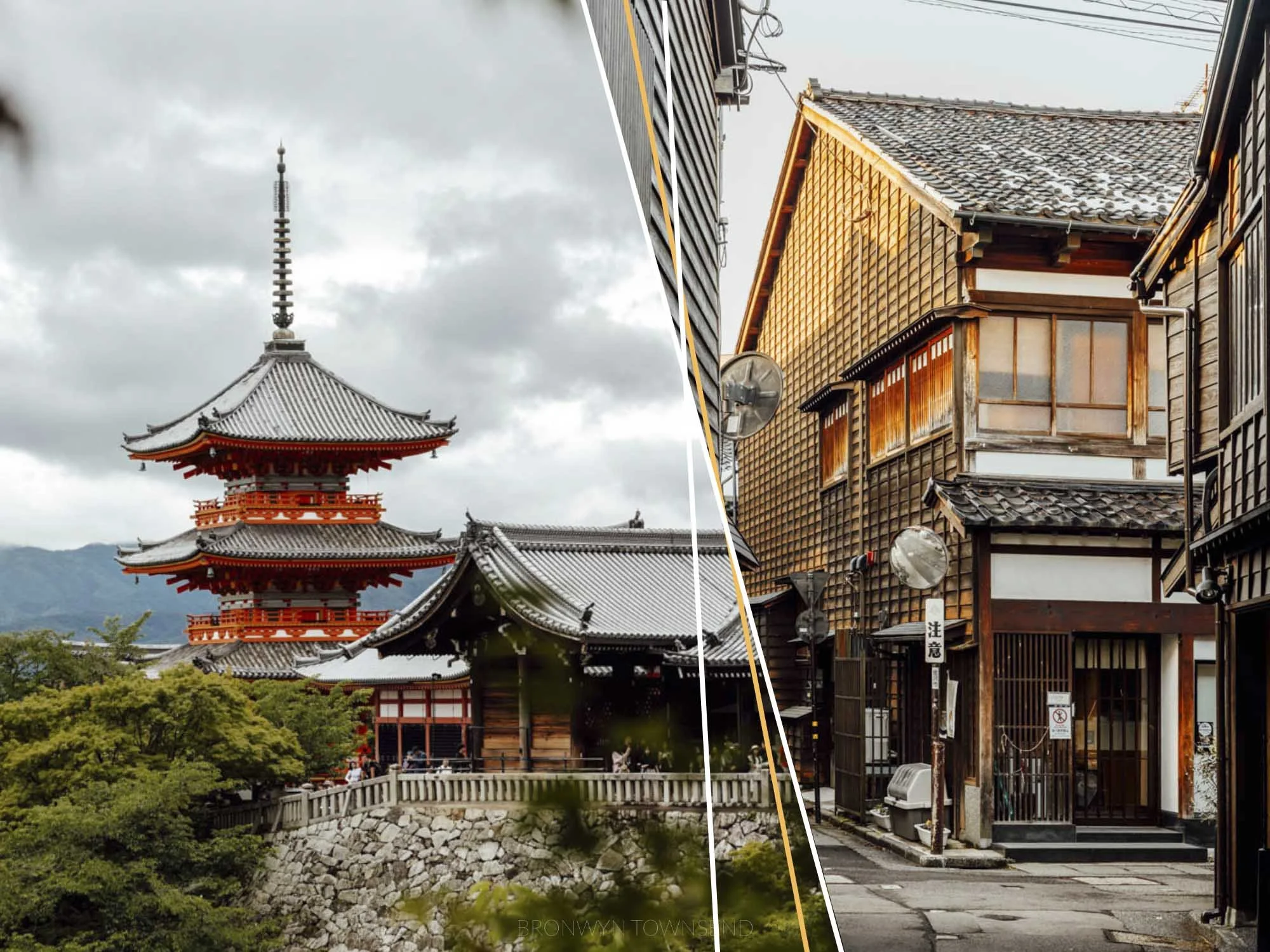
Trying to decide if Kyoto or Kanazawa is right for you? Read my comparison guide
Decide if the JR Pass is right for your travel plans across Japan.
Explore Kyoto’s highlights over five days, including historic districts.
Discover the best sights and experiences in Arashiyama, Kyoto.
Hike the Nakasendo Trail and visit traditional post towns on a self-guided 3-day trip.
Enjoy a scenic trek between the preserved towns of Magome and Tsumago.
Plan your budget with a breakdown of costs for two weeks in Japan.
Get essential tips every traveller should know before visiting Japan.



Take the confusion out of where to stay in Tokyo with this comprehensive guide to the best areas and hotels in Japan’s capital with recommendations.